Commercial building developers in Harford County, MD coordinate design, site work, permitting, and construction under one roof, so a business owner isn't juggling four separate vendors. Every project here, from a retail buildout to a new warehouse, routes through the same Harford County permit office and the same adopted building code. Here's what that process looks like, what it actually costs, and how to vet a developer before you sign anything.
How to Choose a Commercial Building Developer in Harford County
Not every contractor who builds houses is set up to handle a commercial shell, interior build-out, and the Health Department approvals that come with it. Before you request bids, narrow the field with a few direct questions:
- Does the firm handle design, permitting, and construction in-house, or does it subcontract each phase to a different company?
- Is the contractor licensed to work in Maryland, with current liability and workers' compensation coverage?
- Has the firm pulled commercial permits in Harford County specifically, not just elsewhere in the state?
- How are equipment needs covered, an in-house fleet or outside rentals, since equipment delays are a common schedule-killer on site work?
- Can the firm show a portfolio of similar building types (retail, flex/warehouse, office) instead of a generic project list?
This is the same standard we hold ourselves to at LP Homes Inc.. If you're ready to compare quotes, request a free estimate and ask every bidder these same five questions.
Commercial Building Types We Build
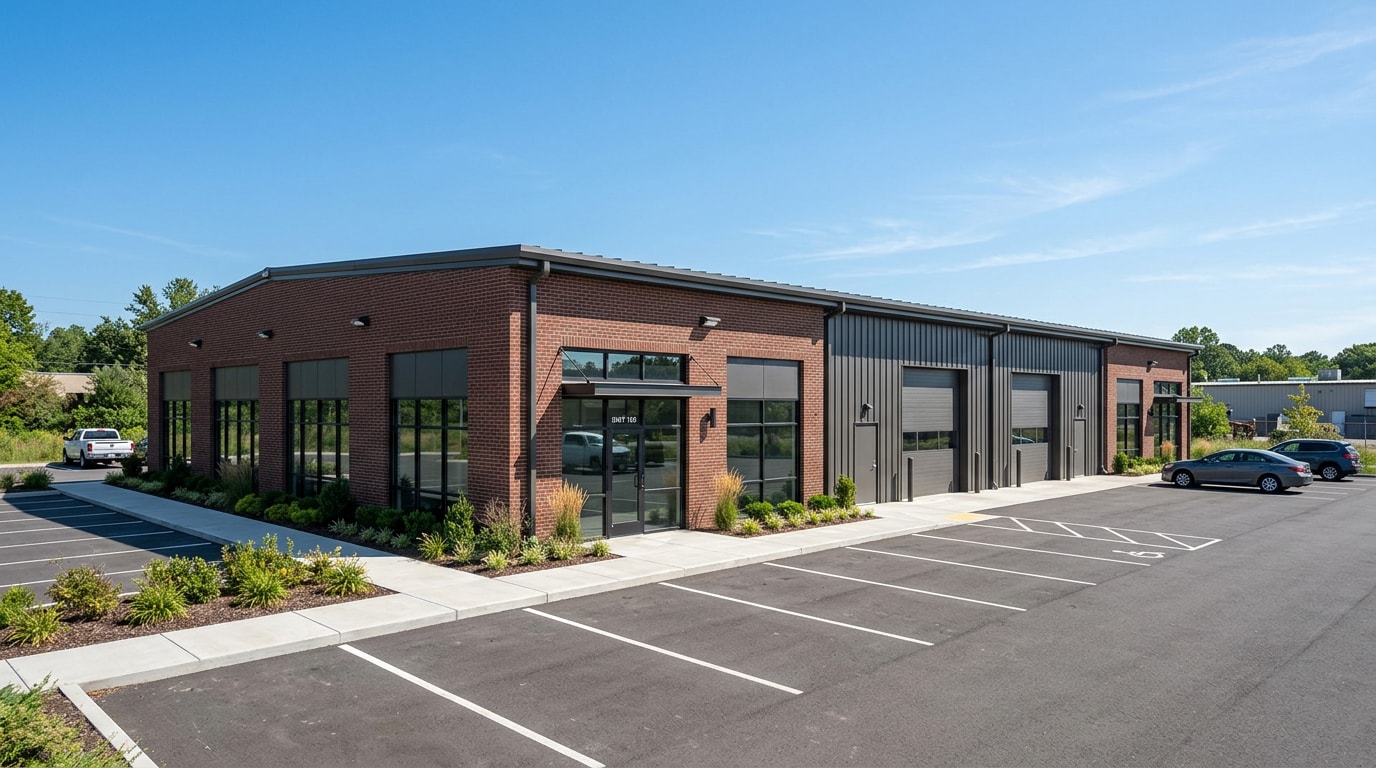
Harford County commercial work spans a wide mix of project types rather than one narrow niche:
- Retail and restaurant space — showrooms, breweries, retail shops
- Warehouse and flex space — storage facilities, distribution centers, service buildings
- Office and medical centers — single-story and small multi-tenant buildings
- Institutional and community buildings — churches, firehouses, and educational facilities
Whatever the category, the goal is the same: a building matched to how the business actually operates day to day. Browse the full general contractor services list or see completed work on the projects page.
Site Development: The Work Before the Building Goes Up
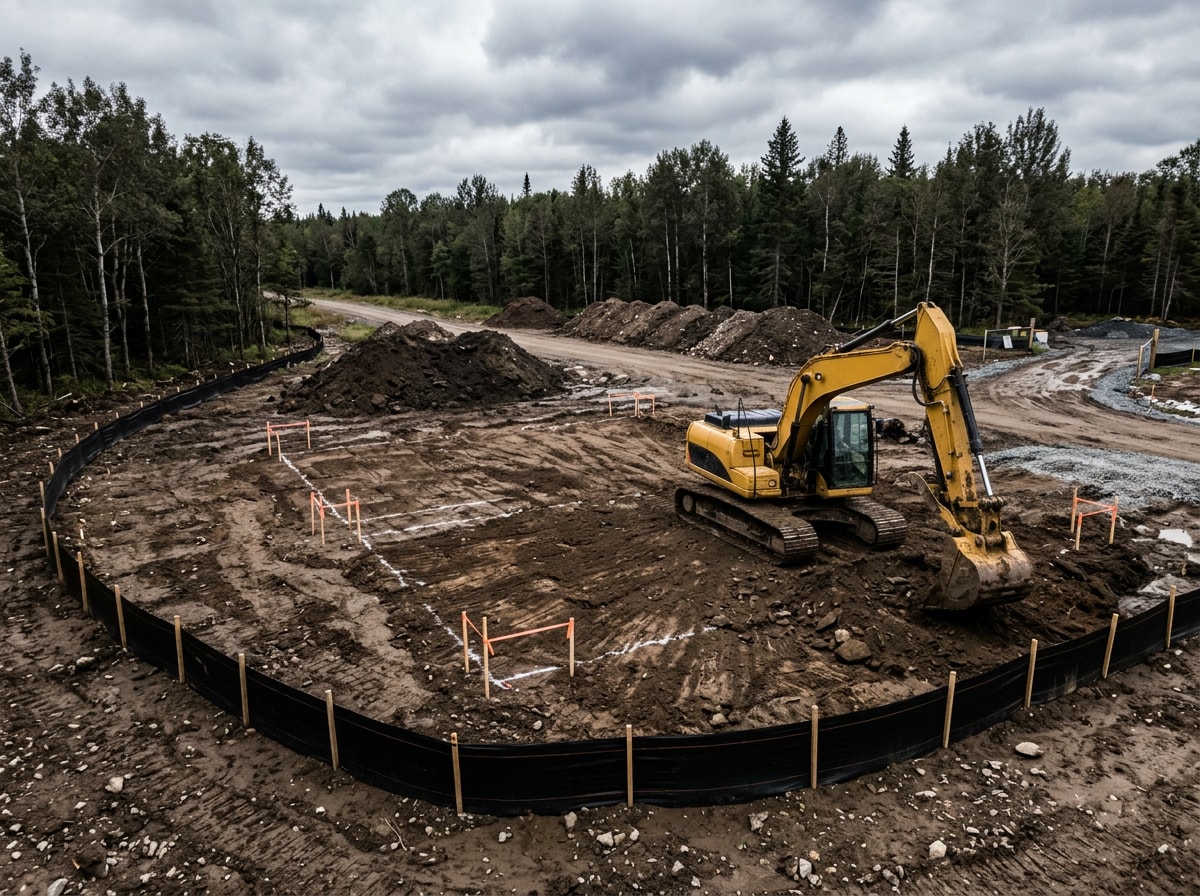
Before any structure goes up, site-development trades do the groundwork: grading, excavation, utilities, concrete, and soil stabilization all play a role in getting a lot to a buildable state.
Site Excavation and Grading
Site excavation covers the grading and stripping work that prepares raw land for a commercial structure, including fine grading for the overall site layout and mass grading for roads and building pads. OSHA requires employers to apply protective systems for excavations, including trenches, under 29 CFR 1926.650, 1926.651, and 1926.652 , and crews are expected to slope, shore, or shield trench walls to prevent cave-ins . Skipping proper site prep often leads to drainage or settling problems after the building is finished.
Soil Stabilization
Soil stabilization strengthens weak or unstable native soil so it can support a commercial structure's load. Methods include soil-cement mixing, compaction, and geotechnical evaluation to determine which approach fits a given site. These measures often tie directly into a project's stormwater and erosion control plan, since stabilized soil behaves more predictably during heavy rain. Site work like grading and paving overlaps closely with hardscape installation on smaller commercial lots.
Equipment and Scheduling
Access to well-maintained heavy equipment keeps a build on schedule. Projects that rely on outside equipment rental are the ones most likely to see a week disappear waiting on a grader or compactor that was booked elsewhere.
Permits, Zoning, and Codes in Harford County
Permitting is where most delays actually happen, not framing or finishes.
A permit is generally needed to construct or alter a structure, demolish or move a structure, install or alter regulated equipment, change a use, or place a structure on a lot.
Commercial construction also requires Health Department and Water and Sewer approvals for all commercial permits.
Once issued, building permits are valid for twelve months from the date of issuance, and become invalid if work isn't commenced and diligently pursued within that window, or is suspended for six months after it begins.
Effective May 29, 2024, Harford County enforces the 2021 International Building Code, 2021 International Residential Code, and 2021 International Mechanical Code, with local amendments adopted under Harford County Council Bill 24-005.
Zoning matters just as much as the building code. In the county's commercial and industrial districts, maximum building coverage is capped at 40% of the lot, and maximum building height runs 36 feet in the Commercial Industrial district and 40 feet in the Light Industrial and General Industrial districts. Those limits shape layout decisions long before a permit application gets filed.
In our own permit visits to the Bel Air office, the step that catches owners off guard isn't the building permit itself, it's waiting on Health Department and Water and Sewer sign-off, since those agencies run on their own review timeline.
What Commercial Construction Costs in Harford County
National per-square-foot averages get repeated across the web so often that they've lost most of their meaning, since the same range shows up on dozens of unrelated cost-calculator sites regardless of region or building type. A more useful signal is the trend: Turner Construction's nationwide Building Cost Index reached 1,575 in the third quarter of 2026, with construction owners and developers facing continued cost escalation as demand across several major building sectors coincides with labor constraints and pressure on material prices.
That index differs from other published measures because Turner's methodology factors in productivity and competitive market conditions, not just material or labor costs alone.
What that means locally: costs are still rising, but the real number for any Harford County project depends on building type, site conditions, and finish level more than any national blended average.
| Project Phase | Key Cost Drivers |
|---|---|
| Site work | Soil conditions, grading volume, stormwater management requirements |
| Shell construction | Building size, structural system, number of stories |
| Interior build-out | Finish level, MEP complexity, occupancy type |
| Permitting & approvals | Health Department and Water and Sewer review timelines, site plan complexity |
A local quote that accounts for your specific lot and building type is the only reliable way to budget a real project.
Design-Build vs. Traditional General Contractor
"Developer" can mean different delivery methods, and the method you choose affects both cost certainty and schedule.
| Factor | Design-Build | Traditional GC (Design-Bid-Build) |
|---|---|---|
| Single point of contact | Yes | No — separate architect and contractor |
| Design and construction overlap | Yes, phases run in parallel | No, design must finish before bidding |
| Cost certainty | Established earlier in the process | Finalized only after design is complete |
| Change order risk | Lower, shared team accountability | Higher, gaps between design and field conditions |
Why Local Site Conditions Matter
Commercial projects in Harford County run into site conditions that don't show up in a generic national guide: Chesapeake Bay Critical Area restrictions near the water, legacy soil conditions tied to the area's agricultural and quarry history, and a permit office that requires Health Department sign-off that many other counties handle differently. A developer who has already pulled permits in Bel Air, Aberdeen, Havre de Grace, or Edgewood knows which approvals run in parallel and which ones can stall a schedule.
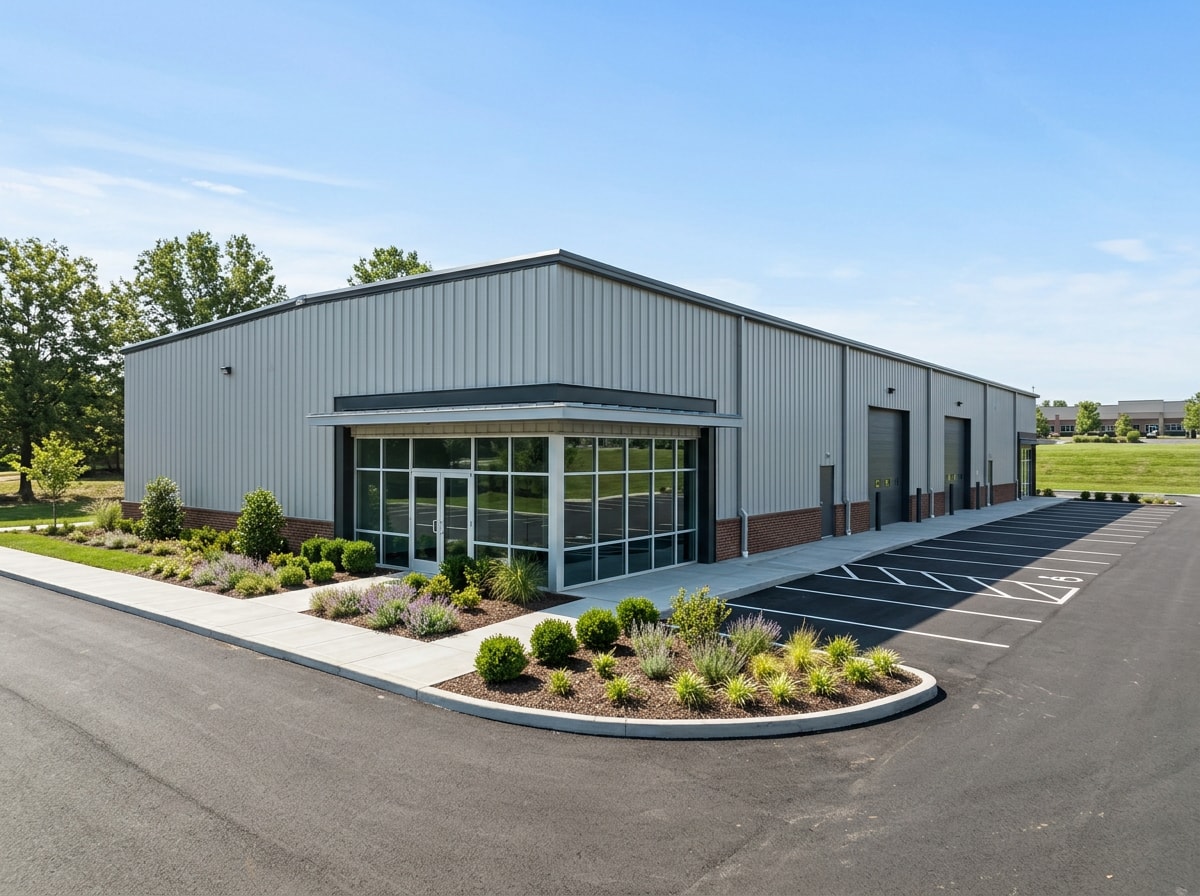
This work extends across the broader region, including Harford County, Baltimore County, and Southern Cecil County. If your project starts with tearing down an existing structure rather than building on open land, our guide to commercial demolition contractors in Baltimore City) walks through that permit sequence in more detail.
Ready to scope your project? Get a free estimate and tell us about the site, the building type, and your target timeline.
FAQ
Do I need a permit to build a commercial building in Harford County, MD?
Yes. A permit is generally needed to construct or alter a structure, demolish or move one, install or alter regulated equipment, change a use, or place a structure.
Commercial permits also require Health Department and Water and Sewer approvals.
How long is a commercial building permit valid in Harford County?
Building permits are valid for twelve months from the date of issuance, and become invalid if work isn't commenced and diligently pursued within that window, or is suspended for six months after construction starts.
What does commercial construction cost in Harford County?
There's no reliable flat number. Turner Construction's nationwide Building Cost Index reached 1,575 in the third quarter of 2026 , confirming costs are still trending up, but the actual figure for your project depends on building type, site conditions, and finish level. A site-specific quote is the only way to budget accurately.
What building codes does Harford County enforce for commercial construction?
Effective May 29, 2024, Harford County enforces the 2021 International Building Code, 2021 International Residential Code, and 2021 International Mechanical Code, with local amendments adopted under Harford County Council Bill 24-005.
How do I choose a commercial building developer in Harford County?
Confirm Maryland licensing and insurance, ask whether design and construction are handled in-house, and look for recent commercial permits pulled specifically in Harford County. A portfolio matching your building type matters more than a long project list.
How long does commercial construction take in Harford County?
Timelines vary by building size and how fast Health Department and Water and Sewer approvals clear, but plan on the full permit process taking several months before groundbreaking, since permits themselves stay valid for twelve months from issuance once approved.
About the Author
This guide was prepared by the general contracting team at LP Homes Inc., a Maryland general contractor serving commercial and residential clients across Harford County, Baltimore County, Baltimore City, and Southern Cecil County. For project-specific guidance, contact our team directly.