Log home builders Harford County, MD buyers can find range from kit dealers who sell materials to licensed general contractors who manage an entire build. "Log home builder" isn't a regulated title, so almost any business can use it. This guide breaks down who actually does what, how to vet a builder before signing a contract, and what a realistic budget looks like for a Harford County build in 2026.
What Log Home Builders Actually Do
A log home builder can be a kit dealer who only sells materials, a shell erector who assembles the log package on-site, or a licensed general contractor who manages the entire project from foundation to final trim. Any of these businesses can legally call themselves a "log home builder," since the term isn't regulated.
That's a problem when comparing quotes. A $40,000 bid from a kit dealer and a $400,000 bid from a full-service general contractor aren't competing offers for the same scope of work. Before comparing price, a Harford County buyer needs to know exactly which role each company is quoting.
In our work managing custom builds and additions across Harford County, the single biggest source of buyer frustration isn't price. It's discovering mid-project that the "builder" they hired was only ever responsible for the log package, leaving foundation, mechanicals, and finish work to be coordinated separately.
The Four Types of Log Home Builders (Compared)
Most companies using the term fall into four categories, and knowing which one you're talking to changes what you should expect from the contract and the warranty.
Kit dealers sell the log package, walls, windows, sometimes trusses, and leave site work and finishing to someone else.
Shell erectors assemble the log shell on your foundation but stop before mechanicals or interior finishing.
Design-build general contractors manage everything under one contract, from permitting through move-in.
Hybrid or full-service builders blend all three, often sourcing the log package while also acting as general contractor.
| Builder Type | What's Delivered | Price Transparency | Who Holds the Risk |
|---|---|---|---|
| Kit dealer | Log package only | High (fixed material price) | Homeowner/GC |
| Shell erector | Log shell, assembled | Moderate | Shared |
| Design-build GC | Full home, turnkey | Lower upfront, fewer surprises | Contractor |
| Hybrid/full-service | Full home + log manufacturing | Moderate to high | Contractor |
Buyers who want one point of accountability generally do better with a design-build general contractor than a kit dealer plus a separately hired crew. The International Log Builders' Association notes that members abide by the ILBA code of conduct and ethics and provide quality workmanship, skilled labour and consistently meet or exceed the industry standards , which is a reasonable floor to expect from any company managing your full build. If you'd rather work with a single, accountable general contractor from permitting to move-in, see how custom home construction works at LP Homes Inc.
What Actually Matters in a Log Home Builder
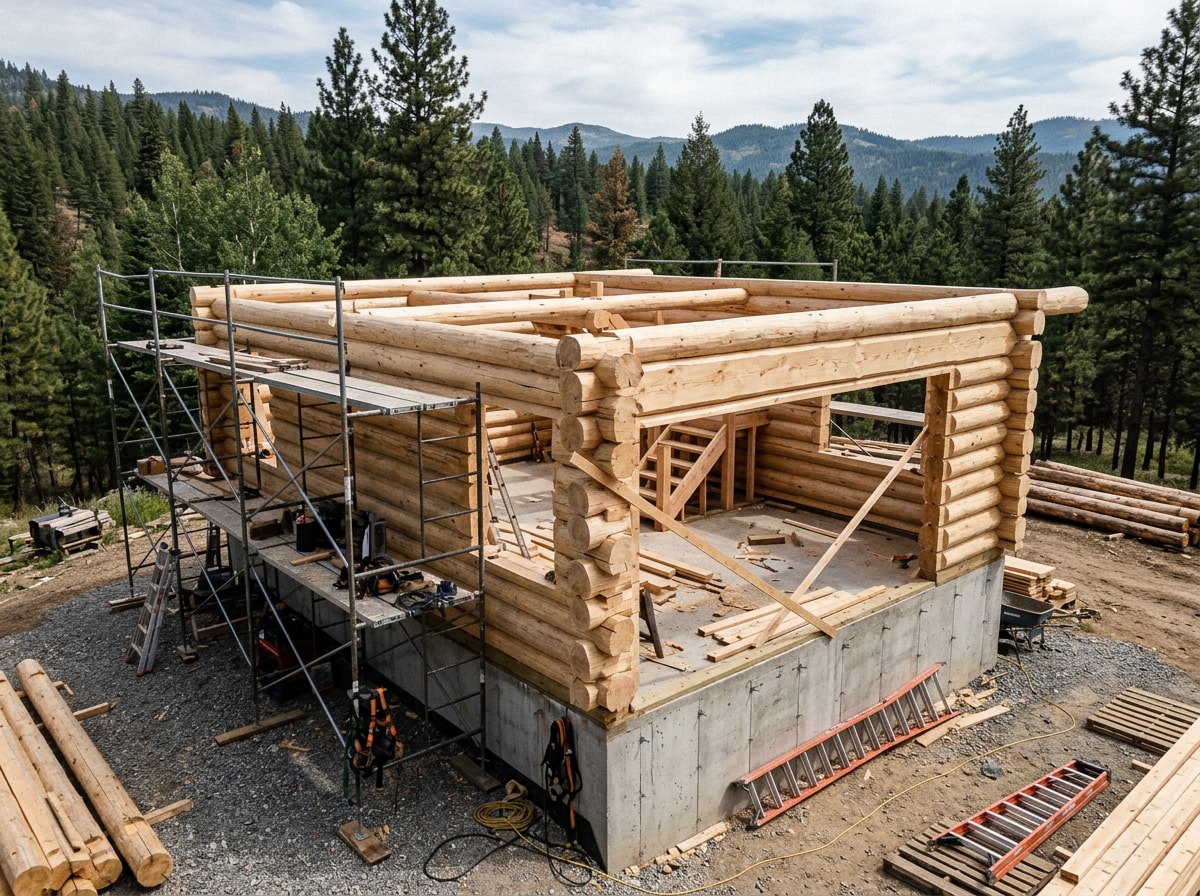
Branding around "log specialist" status matters less than most buyers assume. A conventional builder with strong framing and roofing experience can deliver a tight, durable home, especially with an experienced crew handling log-specific details like corner notching and settling allowances.
What predicts a good outcome is attention to detail: a builder who measures twice, plans for settling, and takes pride in tight joints and clean finish work.
Reputation matters just as much. Look for a company with a track record of satisfied clients, and ask friends or neighbors who've built log cabins locally for honest recommendations. Word of mouth in a county the size of Harford travels fast.
Industry affiliation is a reasonable trust signal too, not proof of quality alone, but it suggests a baseline of training. Pair that with a look at a builder's actual process and project management approach, and browse completed work in our project gallery for a fuller picture than branding provides.
Questions to Ask a Log Home Builder (Before You Hire)
Before hiring a log home builder, ask whether they're a licensed general contractor, request contact for two or three recent homeowners, confirm who manages the project day-to-day, and ask for a project site visit. Vague answers to any of these are worth treating as a warning sign.
Split your questions into two buckets: who the company is, and how the work gets managed.
Questions about the company:
- Are you a licensed general contractor, and in which states? (If not, you're effectively the general contractor.)
- Can I see three recent, similar projects within driving distance?
- Can I talk directly with two recent homeowners, not just read testimonials?
- Who is your structural engineer of record?
Questions about how the project is managed:
- Who will actually be on-site day to day, your crew or unfamiliar subcontractors?
- What's included in the base price versus listed as an allowance?
- How do you handle delays from weather or permitting?
- Can I schedule a site visit before signing a contract?
A builder who welcomes a visit and connects you with past clients without hesitation is signaling confidence. If you're ready to compare answers side by side, get a free estimate and bring this list to the conversation.
Red Flags Worth Walking Away From
Vague or shifting answers about licensing and engineering are among the biggest warning signs. If a builder can't name who stamps the structural plans, that's not a detail to let slide.
No named structural engineer is a serious concern for log construction specifically, since log shells carry loads and settle differently than conventional framing. A builder unwilling to provide references, or who only offers written testimonials instead of phone numbers, is asking you to take their word for it.
Contract red flags matter just as much. A large upfront deposit beyond what's typically allowed is a common setup for deposit scams. So is vague language like "standard fixtures" with no allowance amounts attached.
Before signing anything, verify a contractor's license and registration status directly through the Maryland Home Improvement Commission rather than trusting what's printed on a business card. The Maryland Home Improvement Commission licenses and regulates home improvement contractors and salespersons, investigates complaints by homeowners, and awards monetary damages against licensed contractors , which only applies to work performed by a licensed contractor in the first place.
Finding Log Home Builders Near You in Harford County, MD
Ask any builder you're considering about their actual experience constructing log homes specifically, not just conventional construction, and whether they partner with manufacturers for prefab log cabins and kit packages. Have them walk you through their building process before you commit to anything.
When comparing log home builders in Harford County, bring a rough idea of lot size, budget, and style (handcrafted versus milled log) to your first call. That lets a builder tell you quickly whether your project fits what they actually do.
Shortlist two or three regional builders, and ask each for a consultation rather than just a phone quote. Visiting a completed home or a regional log home show is one of the most reliable ways to judge finish quality in person. A full-service, licensed general contractor such as LP Homes Inc can walk you through what a turnkey build looks like for your lot before you commit to a kit package. For a broader look at how new-build pricing and permitting work in this market, our new home builder guide for Harford County covers the process step by step.
Log Cabin Home Cost: Budget Line Items
A realistic log cabin budget breaks into roughly nine line items, and several get forgotten until the first invoice arrives:
- Land
- Site work and driveway
- Well or water tap
- Septic or sewer
- Foundation
- The log shell package
- Shell assembly labor
- Mechanicals (HVAC, electrical, plumbing)
- Insulation and interior finishing
National cost guides tend to quote broad ranges that don't reflect what site work and utility connections actually cost locally. Well and septic installation varies with soil type and topography, which matters more in parts of the county with rockier or higher-water-table ground.
Maryland's own assessment data adds a useful local reality check. The Maryland Department of Assessments and Taxation applies a County Index as a multiplier against a standard dwelling base rate when calculating replacement cost , and that index has run meaningfully higher for Harford County than for several neighboring jurisdictions in recent assessment cycles. It's not a builder's bid sheet, but it's a sign that generic national cost calculators understate what construction actually runs here.
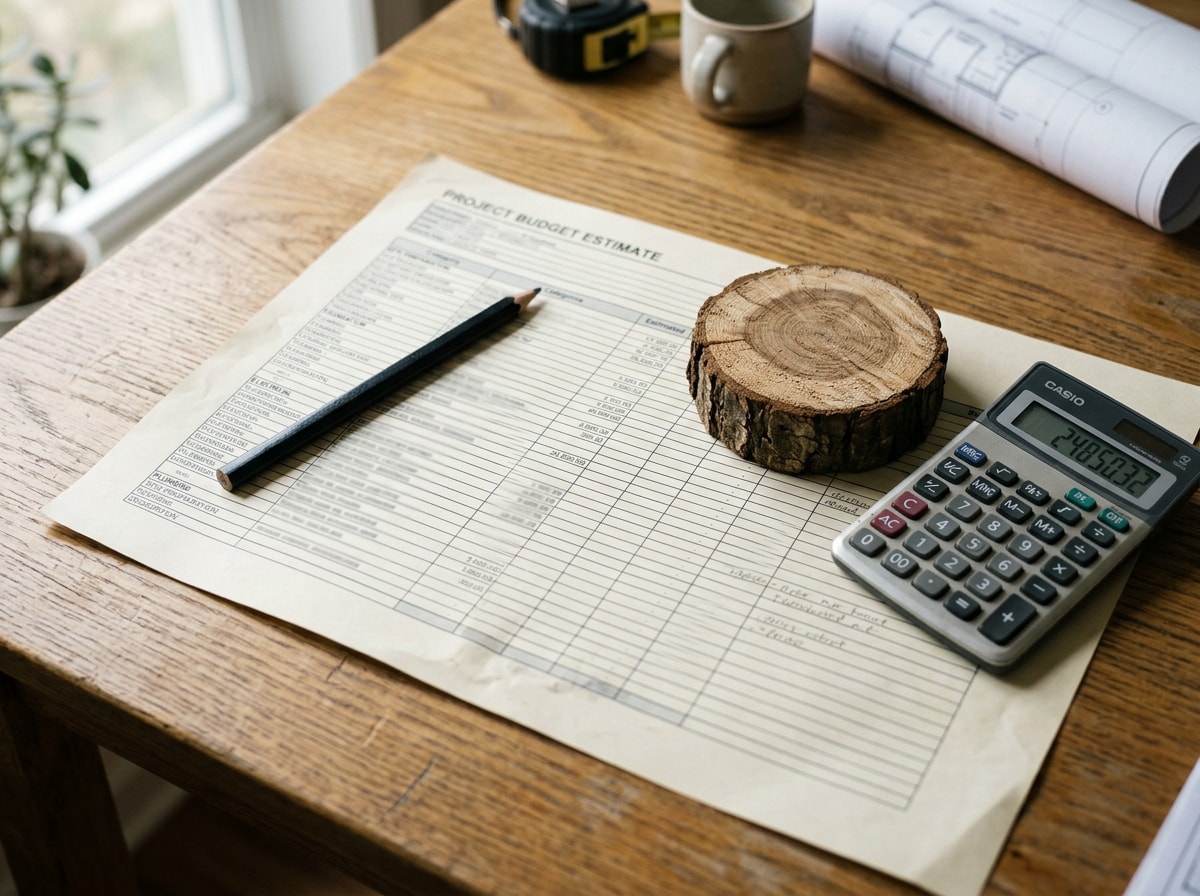
As a general planning range for 2026, turnkey log home construction (land excluded) tends to run somewhere between $150 and $400+ per square foot, depending on log profile, finish level, foundation type, and how much work is DIY versus contracted. That's a wide range on purpose. These line items shift based on lot conditions and the builder type you choose. Treat any number quoted on a first phone call as a placeholder until a site visit and soil or septic evaluation confirm it.
What Drives Log Cabin Home Cost
Two factors move the final price more than any single material choice: size and location. Both deserve a closer look before locking in a budget.
Size Sets the Baseline
Square footage sets the baseline total, but it doesn't set the rate. Smaller cabins typically run higher per square foot than larger homes, because fixed costs, foundation, well, septic, and kitchen, get spread across fewer total feet.
A 900-square-foot cabin and a 2,800-square-foot log home both need a septic system and a kitchen, but the larger home spreads that fixed cost over more square footage. That's why a small, simple cabin can sometimes cost more per square foot than a larger home nearby.
Log Profile and Code Compliance Add Cost Conventional Homes Don't Carry
Log walls aren't built to the same prescriptive tables as stick framing. The National Association of Home Builders' Log and Timber Homes Council notes that considerable evolution has occurred in codes and standards, with updates incorporating ICC 400, the Standard on the Design and Construction of Log Structures , which governs structural, thermal, and settling provisions specific to log walls. That standard is why a competent log builder budgets separately for settling allowances around doors and windows, and why an engineer familiar with ICC 400 isn't optional on a log build the way it might be on a standard addition.
FAQ
How much does it cost to build a log home?
Most turnkey log homes in 2026 land somewhere between $150 and $400+ per square foot, land excluded, depending on log profile, size, finish level, and site conditions. See the budget line-item breakdown above for costs that typically get missed early on.
How do I find a log home builder near me in Harford County?
Start with builders who can show recent, similar projects nearby, confirm their licensing status, and offer direct contact with past homeowners. Shortlist two or three, request a consultation, and visit a completed home before signing anything.
What questions should I ask a log home builder before hiring one?
Ask whether they're a licensed general contractor, who will actually be on-site managing the work, and whether you can speak with two recent homeowners directly. Clear, willing answers tell you as much as the answers themselves.
Are log homes a good investment?
Log homes can hold value well, but resale depends heavily on build quality, local buyer demand, and ongoing maintenance like staining and sealant upkeep. They're not a guaranteed premium investment everywhere, and a neglected log home can sell for less than a comparable conventional house nearby.
How long does it take to build a log home in Harford County?
Plan for 9 to 18 months from signed plans to move-in for a full custom build, depending on permitting timelines, lot conditions, and whether you're using a handcrafted or milled log package. Kit-only shells can be dried in within weeks, but that timeline doesn't include foundation, mechanicals, or finish work.
Is it cheaper to buy a log cabin kit or hire a full-service builder?
A kit alone is almost always the cheapest number you'll see quoted, but it only covers materials. Once you add foundation, assembly labor, mechanicals, and finishing, a hybrid or design-build approach is often comparable in total cost and carries far less coordination risk for the homeowner. Contact us for a free estimate that accounts for the full scope, not just the kit price.