
A site foreman in Baltimore County, MD is the one person on a jobsite who decides what gets built today, not next week. Hire the wrong one and a clean schedule turns into change orders and safety write-ups within a month. This guide breaks down what the role actually covers, what it pays locally, and exactly what to check before you put someone in charge of your crew.
Visit LP Homes Inc to see our services and request a free estimate.
What a Site Foreman Actually Does
A site foreman runs the gap between a plan and a finished wall. They take the schedule a project manager or superintendent hands down, break it into daily tasks, and keep the crew moving on it hour by hour. On the remodels and additions we run across Baltimore County, the foreman is the person a homeowner actually talks to each morning, not the name printed on the contract.
Day to day, that means:
- Assigning tasks to each trade at the start of the shift
- Reading blueprints and grading or elevation plans without hesitation
- Catching safety violations before an inspector does
- Flagging material shortages or schedule conflicts early enough to fix them
Site Foreman vs. Superintendent vs. Field Engineer
People use "foreman" and "superintendent" interchangeably, and that mix-up causes real hiring mistakes. A foreman runs one crew's daily execution. A superintendent oversees the whole jobsite, including multiple subcontractors and the master schedule. Here's how the chain typically breaks down on a Baltimore County commercial or residential build:
| Role | Reports To | Core Responsibility | Typical Scope |
|---|---|---|---|
| Site Foreman | Superintendent | Daily crew direction, task sequencing, on-site problem solving | One crew or trade |
| Superintendent | Project Manager | Master schedule, subcontractor coordination, quality control | Entire jobsite |
| Field Engineer | Superintendent | Layout, surveying, technical documentation | Jobsite-wide technical support |
| Safety Manager | Superintendent / PM | Compliance audits, incident prevention | Jobsite-wide safety program |
What to Look for in a Site Foreman Candidate
A strong foreman combines four traits, and candidates missing even one tend to create friction once a project is underway:
- Clear leadership and communication — can direct a mixed crew without constant repetition
- Hands-on trade knowledge — has actually done the work they're now supervising
- Fast problem-solving under pressure — doesn't wait for a superintendent to make small calls
- Safety compliance — treats OSHA standards as daily habit, not paperwork
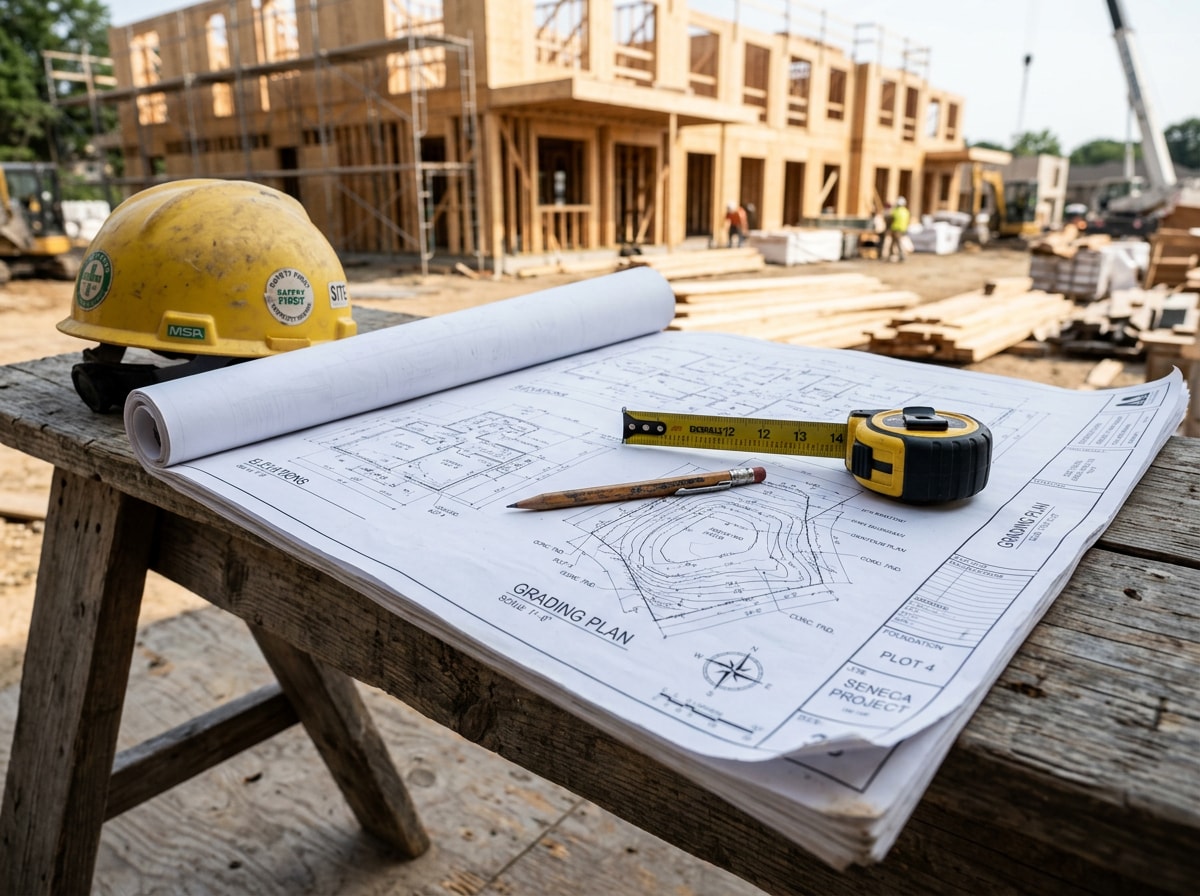
One practical red flag during an interview: hand a candidate a basic grading or elevation plan. If they can't walk you through it without hesitating, their blueprint reading isn't sharp enough for the role.
Types of Foremen You Can Hire
Foremen specialize by trade, and matching the specialty to your project cuts down on expensive on-the-job learning curves:
- Carpentry foreman — framing and finish work
- Civil or excavation foreman — sitework and grading
- Concrete foreman — pours, forming, and elevation benchmarks
- Electrical foreman — wiring crews and code compliance
- Masonry foreman — brick, block, and stone crews
What Site Foremen Earn in the Baltimore Area
Pay is one area where guessing gets expensive. The largest construction and extraction occupations nationally were construction laborers and first-line supervisors of construction trades and extraction workers, with first-line supervisors of construction trades averaging $86,450 a year as of the most recent federal release. Locally, the average hourly pay for carpenter foreman roles in the Baltimore, MD market runs around $29.95, with most workers earning between $26.25 and $32.98 per hour depending on experience and employer. Budget toward the higher end if you need someone who can also read plans, run a safety meeting, and manage a punch list without hand-holding.
Maryland Licensing and Safety Rules Foremen Need to Know
Hiring in this market means understanding rules that a generic job-board posting won't flag.
MHIC registration. Most home improvement contractors operating in Maryland must carry current registration through the Maryland Home Improvement Commission, and effective June 1, 2024, section 8-302.1 of the Business Regulation Article of the Maryland Code requires that all Maryland home improvement contractors maintain general liability insurance of at least $500,000 . That's a tenfold jump from the old $50,000 floor, and it's worth confirming directly on the Maryland Home Improvement Commission's official page before you sign a contractor rather than taking a resume's word for it.
OSHA training. The OSHA Outreach Training Program for the construction industry provides training for workers and employers on the recognition, avoidance, abatement, and prevention of safety and health hazards in construction workplaces . It's voluntary at the federal level, but most Baltimore County GCs won't put someone in charge of a crew without an OSHA 10 or OSHA 30 card on file. Full course details are on OSHA's Outreach Training Program page.
How to Vet a Foreman Candidate
Skip the resume-only review. Run every candidate through this checklist:
- Verify trade certifications and years of hands-on experience
- Confirm current OSHA 10 or OSHA 30 training
- Run a background check
- Review experience on projects similar in size and type to yours
- Walk them through a real blueprint or grading plan on the spot
- Check references from a previous superintendent or GC, not just a coworker
Why Baltimore County Homeowners and GCs Work With LP Homes Inc
If you're a homeowner rather than a hiring manager, the easier fix is choosing a general contractor that already employs vetted foremen instead of subcontracting leadership out to the lowest bidder. Our crews run daily stand-ups the same way on every Baltimore County job, foreman first, then the trades, so there's one person on-site who knows the full schedule and can answer your questions without a phone call to the office. If you're also staffing a construction lead role elsewhere in the region, our construction lead hiring guide for Baltimore City covers pay and duties for that adjacent position.
Ready to start a project with a crew that's already led by an experienced foreman? Get a Free Estimate and we'll walk you through who's actually running your job.
FAQ
What does a site foreman do on a construction site?
A site foreman takes the project schedule and turns it into daily task assignments, supervises the crew directly, enforces safety rules in real time, and solves problems on-site before they stall work. They're the first line of leadership between the crew and the superintendent or project manager.
What's the difference between a foreman and a superintendent?
A foreman manages one crew's daily execution. A superintendent oversees the entire jobsite, including multiple trades, subcontractors, and the master schedule. On a Baltimore County build, the foreman typically reports to the superintendent.
How much do site foremen make in Baltimore County, MD?
Pay varies by trade and experience, but carpenter foreman roles in the Baltimore market average close to $30 an hour, with experienced candidates earning more. Nationally, first-line supervisors of construction trades average $86,450 a year according to federal wage data.
Does a site foreman need OSHA certification?
OSHA 10 or OSHA 30 training isn't a federal requirement in every case, but most Baltimore County contractors won't hand someone a crew without it. OSHA 30 is the more common standard for anyone with supervisory responsibility.
How do I know if a foreman has enough experience?
Look for project variety across different build types, solid safety knowledge, and strong communication with both crews and management. A foreman who's only worked one type of job may struggle to adapt to new conditions.
Why is hiring the right foreman so important?
A weak hire creates schedule risk, safety risk, and budget overruns that compound as a project drags on. A strong foreman keeps the crew productive, safe, and on schedule from day one.