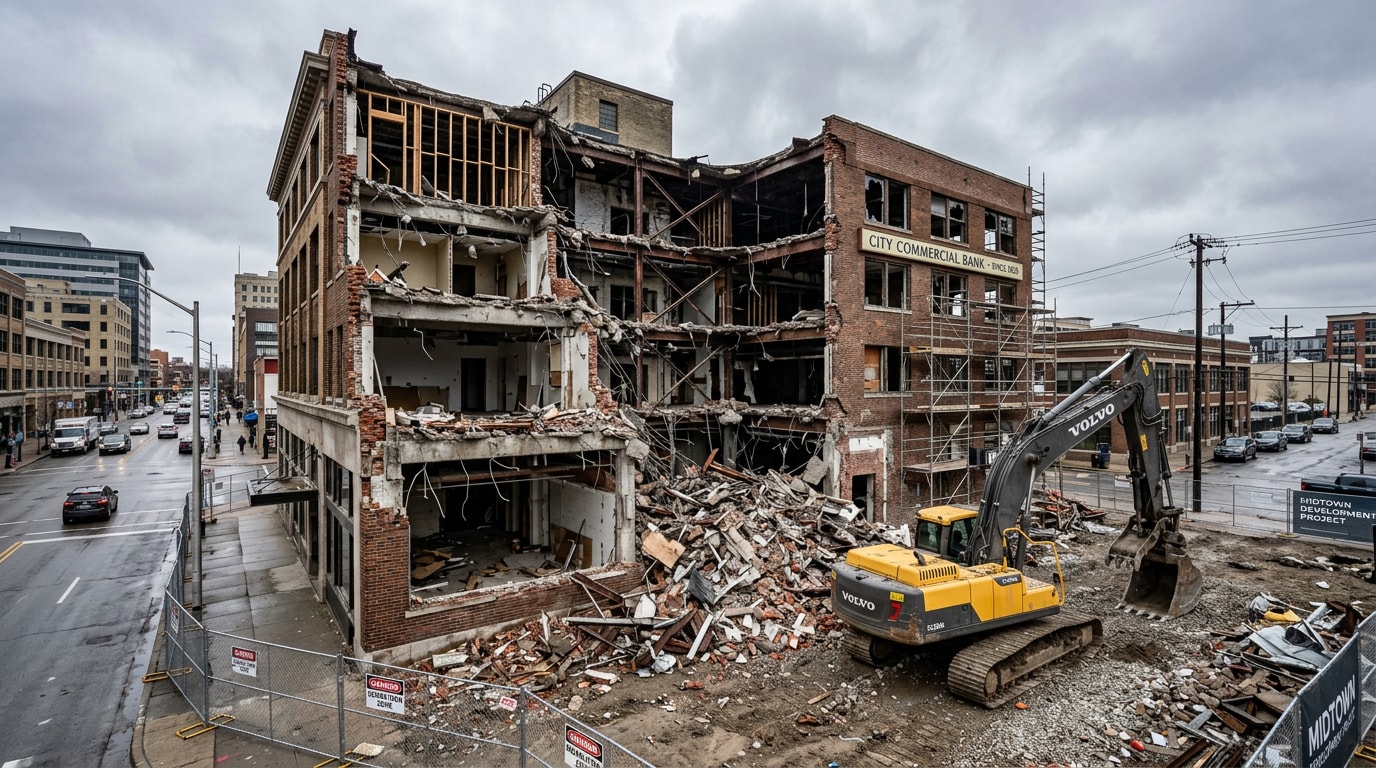
Commercial demolition contractors in Baltimore City, MD face one of the stricter permitting trails in Maryland, with rat-eradication certifications and adjoining-owner notices required before a wall ever comes down. Property owners planning a teardown, interior strip-out, or site-prep project need a licensed team that can handle that paperwork as confidently as it runs a hydraulic excavator. This guide breaks down the services, methods, and Baltimore City-specific requirements that separate a licensed demolition partner from a crew that just owns heavy equipment.
Commercial Demolition Services in Baltimore City, MD
Commercial demolition covers far more than knocking down a single building. A contractor worth hiring adjusts its approach based on structure size, age, and surrounding neighborhood, using strategic planning, permit coordination, and the right equipment for everything from a single retail buildout to a full industrial teardown.
- Office building demolition - from single-floor buildouts to multi-story interior strip-outs
- Retail and shopping center demolition - often phased to keep neighboring tenants operating
- Restaurant and hotel demolition - frequently paired with interior demolition before a full teardown
- Warehouse and industrial demolition - factories, mills, and manufacturing plants that require specialized equipment and trained crews
- Institutional demolition - schools, hospitals, and university buildings that demand heavy coordination with occupied adjacent structures
- Parking garage and concrete demolition - concrete-specific equipment and debris handling
Many commercial projects in Baltimore City start as an interior strip-out rather than a full teardown, especially in older rowhouse commercial corridors where only the interior needs to come down ahead of a remodel. Our interior demolition services page covers that scope in more detail, and the general contractor services hub lists the trades that typically follow demolition on the same project.
Demolition vs. Deconstruction: Which Fits Your Baltimore Project?
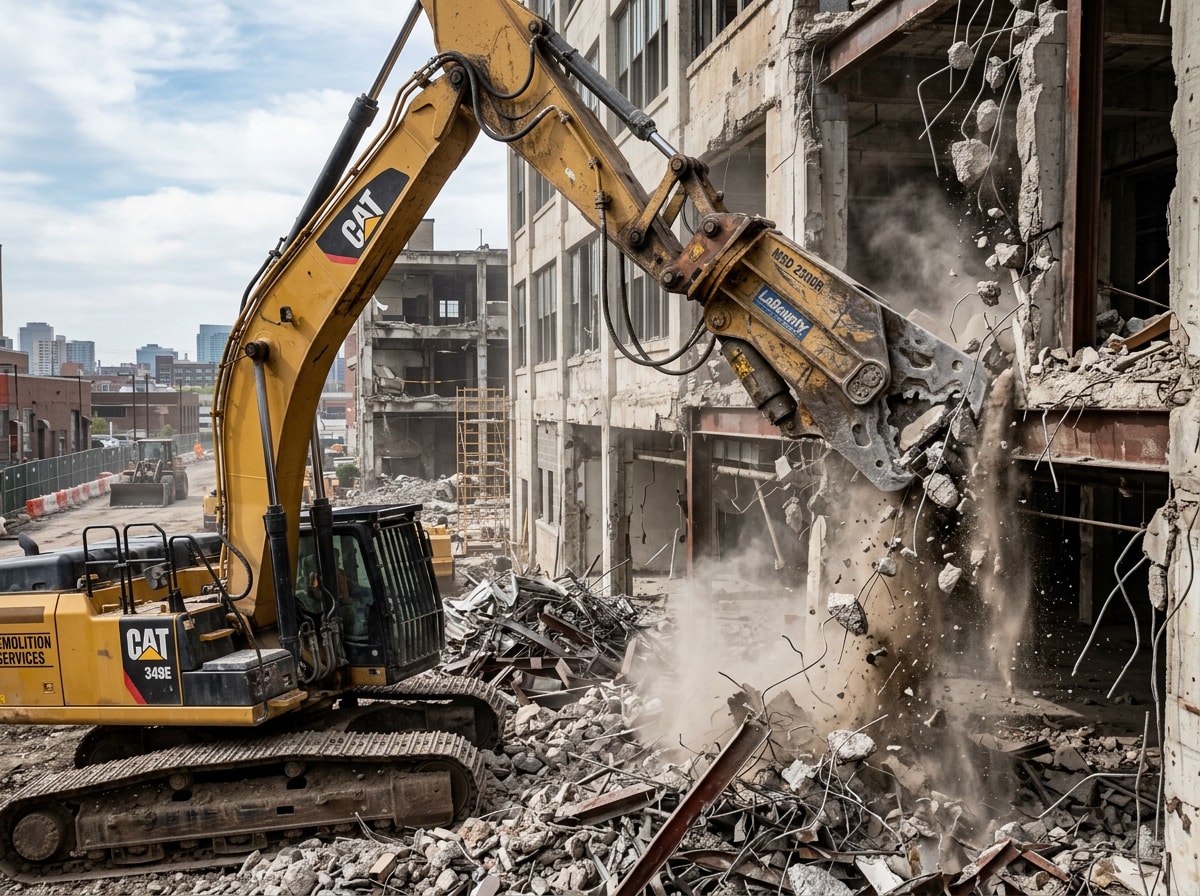
Demolition and deconstruction get used interchangeably, but they aren't the same process. Demolition tears a structure down quickly, sometimes after a careful initial pass to remove hazardous materials. Deconstruction disassembles a building piece by piece to preserve reusable materials, usually ahead of a remodel.
The right choice depends on the project goal. A straight teardown suits a site headed for new construction. Deconstruction makes more sense when an owner wants to salvage brick, timber, or fixtures before rebuilding, which is common in Baltimore City's older commercial stock.
Methods: Explosive, Non-Explosive & Selective Demolition
Three methods cover most commercial projects in Baltimore City:
| Method | How It Works | Best For |
|---|---|---|
| Explosive (implosion) | Controlled collapse using charges placed at structural points | Tall, isolated buildings where speed matters and surroundings allow it |
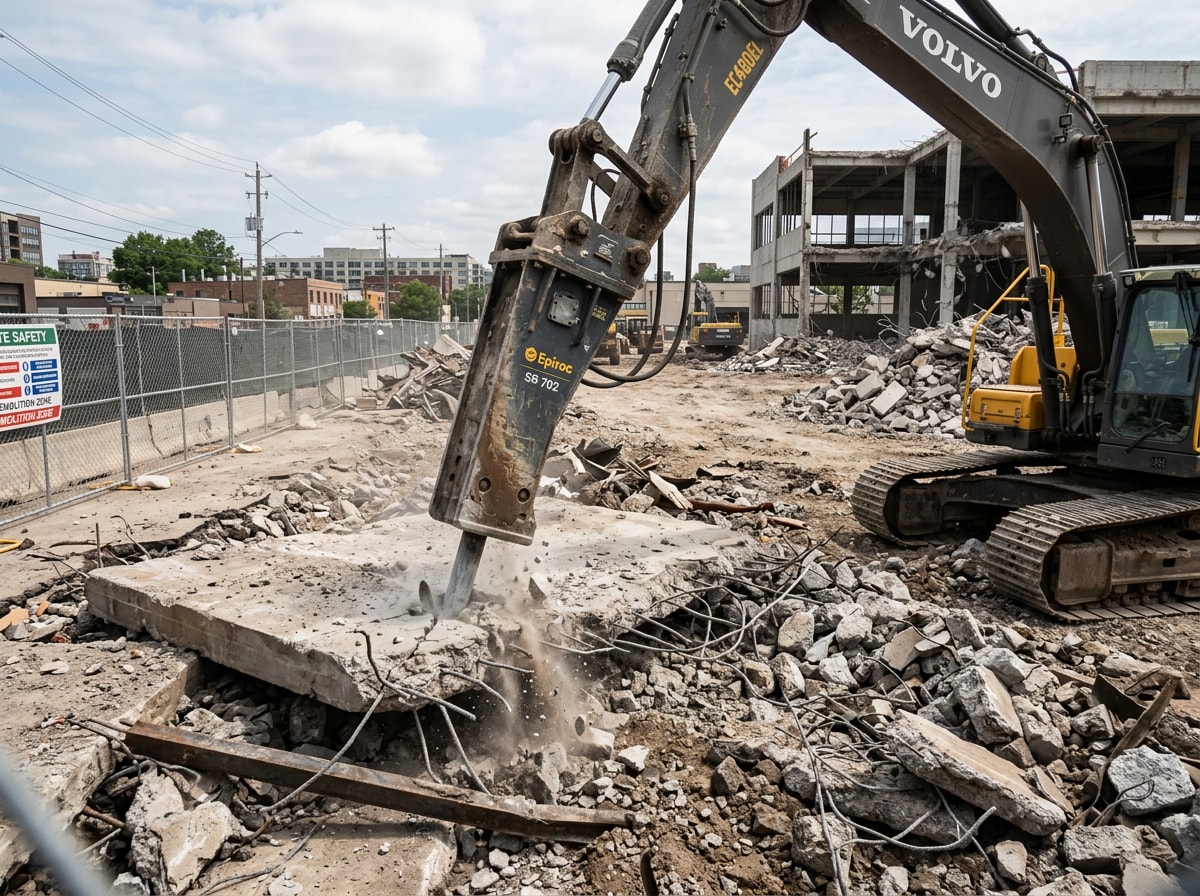
| Non-explosive | Hydraulic breakers, excavators, or a wrecking ball bring the structure down mechanically | Mid-size buildings in tighter urban blocks where explosives are unsafe |
| Selective | Specific materials or sections are removed for reuse or recycling | Interior strip-outs, renovations, and projects targeting LEED or salvage goals |
Selective demolition lets a contractor pull out cabinetry, fixtures, and framing without touching the shell of a building, which is exactly the scope most remodel-driven commercial projects in Baltimore City actually need.
Baltimore City Permits & Pre-Demolition Requirements
This is the step most national demolition sites gloss over, and it's where Baltimore City differs from surrounding counties. A razing or demolition permit in Baltimore City covers exterior demolitions or razing of residential and commercial buildings, accessory structures, and the moving of buildings or structures into or within Baltimore City.
A licensed demolition contractor is required on nearly every job. A licensed Demolition Contractor is required for all razing permits, though a homeowner can raze a detached garage or shed on their own property, but if a contractor is used, it must be a demolition contractor.
The application package is longer than most owners expect. It typically includes:
- A notarized owner acknowledgment of demolition
- A signed Maryland Department of the Environment Notification of Intent to Demolish
- A rodenticide treatment and abatement certification
- Written notice to adjoining property owners
- A site plan meeting the city building code's demolition section
These typically include a notarized Owner Acknowledgement of Demolition Affidavit, a signed Maryland Department of the Environment Notification of Intent to Demolish Project Information form, a Certification of Treatment & Abatement form for rodenticide procedures, copies of the notice to adjoining owners, and a site plan.
Before any of that paperwork gets filed, federal and state rules require an asbestos check. Federal and State regulations require each owner or operator of a facility to inspect the building for presence of asbestos prior to any building renovation or demolition project. The Maryland Department of the Environment's asbestos guidance for contractors walks through notification thresholds and licensing rules in more detail.
Check our Baltimore City service area to confirm coverage for your project, or contact our team if you're unsure which permit category applies.
The Demolition Process, Start to Finish
A commercial demolition project in Baltimore City moves through a predictable sequence, though the exact timeline shifts with building size and site conditions.
Site Survey, Permits & Preparation
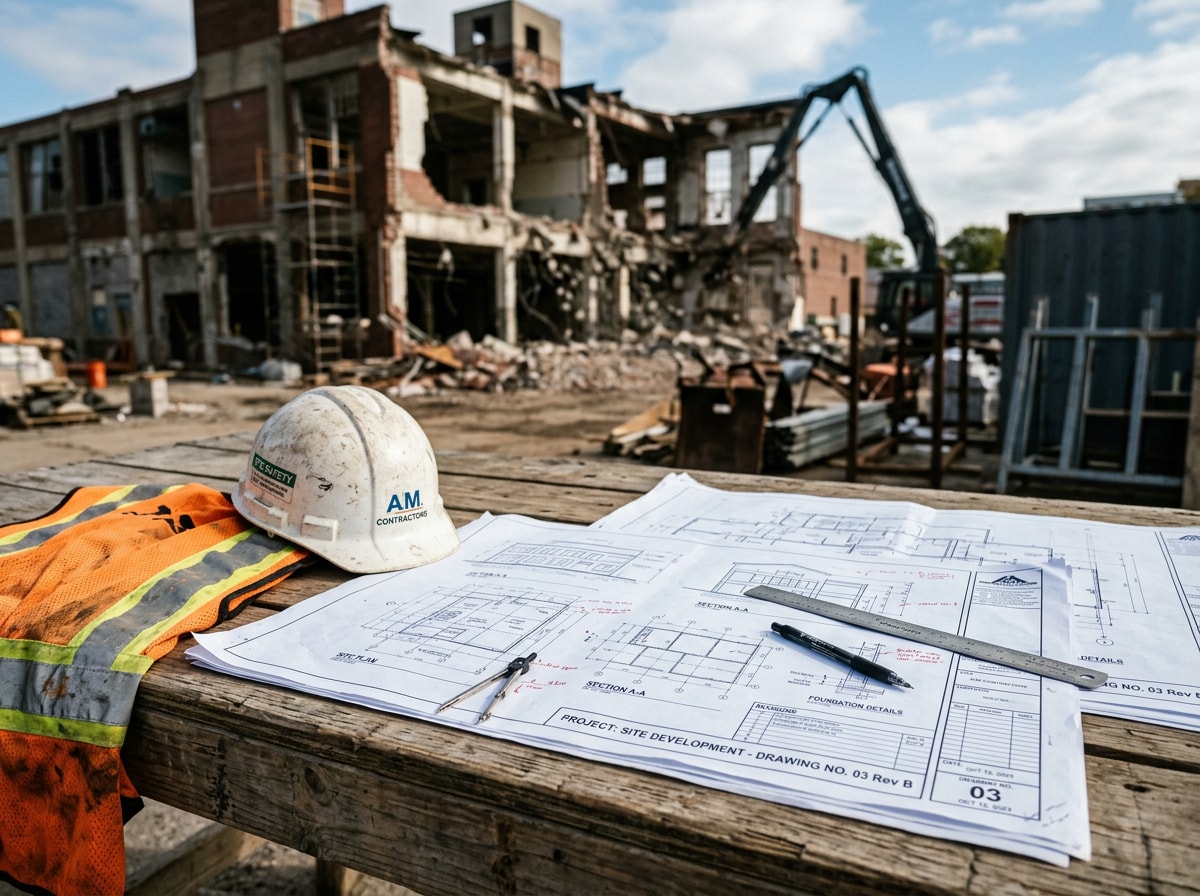
Every project starts with a site survey and a written plan of action. That assessment feeds directly into the permitting stage, where the contractor handles paperwork and city requirements on the owner's behalf.
On a recent interior strip-out ahead of a Baltimore City restaurant buildout, our crew found abandoned gas lines behind a dropped ceiling that never appeared on the building's as-built drawings. That's the exact scenario a proper pre-demolition survey is designed to catch before equipment ever touches the structure, not after a line gets cut. Site prep then covers utility shutoffs and safety barriers before any demolition work begins.
Demolition Day, Cleanup & Debris Removal
Demolition day brings the right equipment to the site to get the structure down safely and efficiently. Afterward comes debris removal and cleanup: hauling material off-site, sorting what can be reused, and recycling concrete and metal wherever the local market supports it, leaving the lot ready for the next phase of construction.
If your project involves coordinating demolition with a new build on the same site, our BIM consultancy guide for Baltimore City covers how model-based coordination keeps demolition and new construction from colliding on the schedule.
Why Professional Safety Practices Matter
Commercial demolition projects routinely uncover problems that never show up on a blueprint: outdated wiring, hidden plumbing, or environmental hazards buried in older construction. A professional contractor knows how to spot these risks during a hazardous material survey, before the first wall comes down.
This is also where OSHA's demolition standards carry real weight. 1926.850(a)(1), which requires an "engineering survey" to be completed prior to starting demolition, accounts for more than half of preparatory operations citations. That single requirement, detailed on OSHA's demolition standards page, is one of the most frequently skipped steps on demolition sites nationwide. A contractor who treats that survey as routine, rather than optional, tends to avoid the costly surprises that stall projects mid-teardown.
Choosing the Right Partner for Your Next Commercial Project
A proven track record, local Baltimore City experience, and uncompromising safety practices matter more than a low initial bid. Property owners want a contractor whose experience translates into on-time delivery and budget-conscious decisions, not just speed.
Before signing a contract, verify:
- Current Baltimore City demolition contractor license
- General liability and workers' compensation insurance
- OSHA compliance history
- Asbestos-certification credentials, or a working relationship with a licensed asbestos contractor
- Equipment the crew actually owns versus subcontracts
The National Demolition Association maintains safety and training standards that many established contractors follow, and its member directory is a reasonable cross-check when vetting an unfamiliar crew.
Get a free estimate before you sign anything, and confirm licensing and insurance in writing as part of that first conversation.
FAQ
How long does a commercial demolition project take in Baltimore City?
Project length depends on building size, structure type, and site access, so most contractors schedule a site visit first. That visit produces a clear timeline before any teardown date gets confirmed. Request a site assessment to get a project-specific estimate.
Is a commercial demolition contractor in Baltimore City licensed and insured?
Reputable firms carry general liability and workers' compensation coverage on every job. The licensee must have an insurance policy that complies with the minimum requirement of the city's demolition insurance section, and the policy must provide coverage for all operations for which a permit might be sought. They also comply with Baltimore City permit rules and Maryland state regulations throughout the project.
How much does commercial demolition cost in Baltimore City?
There's no single number that applies across the board. An interior strip-out in a small retail space costs far less than a multi-month teardown of an industrial complex. Square footage, hazardous material abatement, site access, and the method used all drive the final quote more than any flat rate a contractor might advertise. Get a written, project-specific quote rather than relying on a general estimate.
Do I need a permit for commercial demolition in Baltimore City?
Yes. Demolition (Razing) Permits require a Baltimore City licensed contractor. Site plans, adjoining-owner notices, and proof of insurance are all reviewed before approval, and the city's demolition permit page lists the current documentation requirements.
What's the difference between demolition and deconstruction?
Demolition tears a structure down quickly. Deconstruction takes it apart piece by piece to salvage reusable materials like brick, timber, or fixtures. Most commercial projects in Baltimore City use demolition, but deconstruction is worth considering when an owner wants to recover materials before rebuilding.
What is selective demolition?
Selective demolition removes specific materials or sections of a building, such as interior walls, cabinetry, or fixtures, while leaving the structural shell intact. It's the most common scope for remodel-driven commercial projects and is handled differently than a full teardown.
LP Homes Inc is a Maryland general contractor serving Baltimore City, Baltimore County, Harford County, and Southern Cecil County, with interior demolition and site-prep work as part of its broader construction and remodeling services. Visit the LP Homes Inc homepage to see the full range of services, or contact us to talk through a specific project before you request bids.