Finding tiny home builders in Baltimore City, MD means navigating one of the most code-aware small-home markets in Maryland. The city has formally adopted construction standards for homes under 400 square feet, and a new statewide law is forcing Baltimore to open the door to backyard units by October 2026. This guide breaks down what's legal, what it costs, and how the build process actually works.
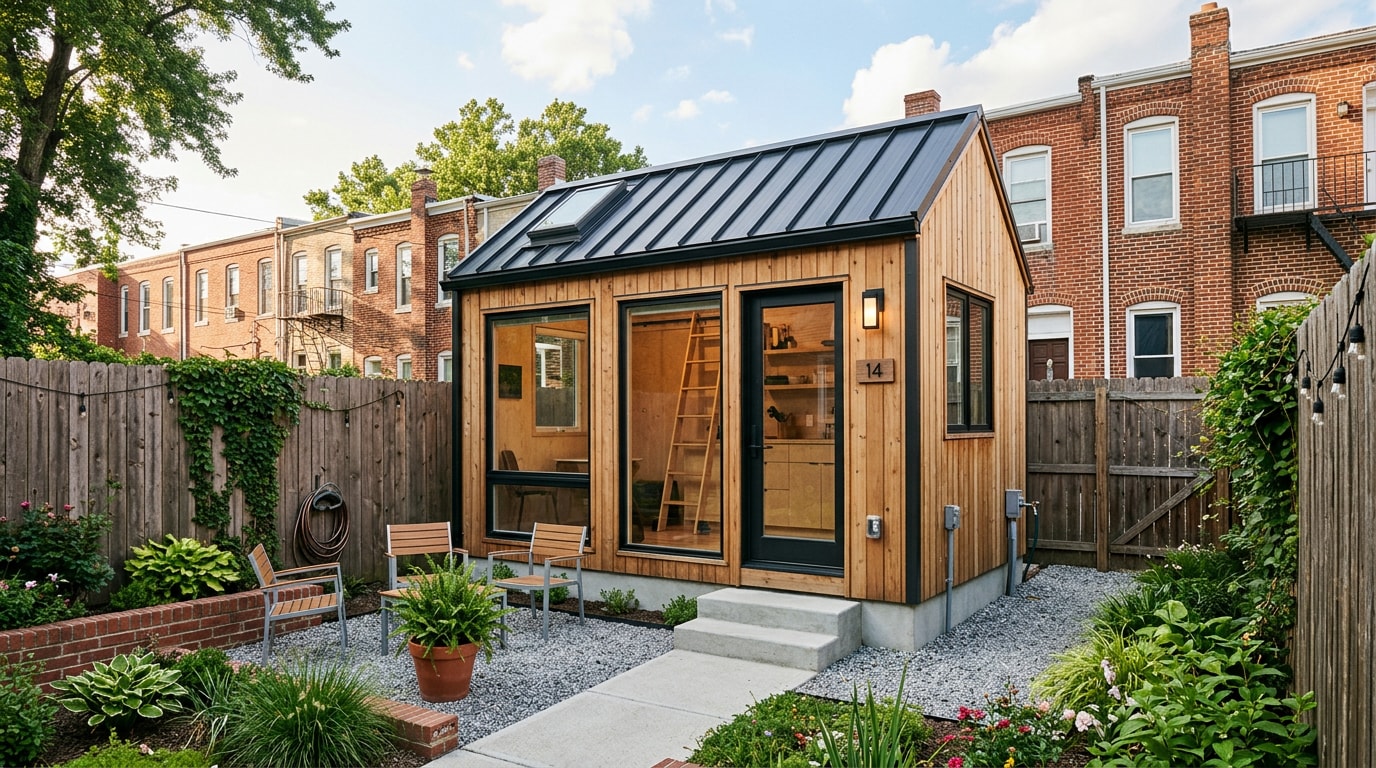
A tiny home can serve as a primary residence, a backyard accessory dwelling unit (ADU), or a short-term rental near the harbor. Buyers generally pick one of three paths: a foundation-built custom home, a factory-built prefab or park model, or a tiny home on wheels (THOW).
Is a Tiny Home Legal in Baltimore City?
Yes, with conditions. Legality in Baltimore City depends almost entirely on whether the structure sits on a permanent foundation or on a trailer chassis.
Foundation-built tiny homes are treated as dwellings under the state building code. THOWs are generally classified as recreational vehicles, which limits where they can legally sit long-term and whether they can be used as a permanent residence. Setback rules, lot coverage, and ADU eligibility also vary by zoning district, so a layout that works on one rowhouse lot may not work two blocks away.
Maryland Has Officially Adopted Tiny House Building Standards
This is the detail most buyer guides skip: Maryland's statewide building code modifications explicitly name tiny houses. Under the Maryland Building Performance Standards, the state's regulations state that "the provisions in the Appendices AF Radon Control Methods and AQ Tiny Houses are adopted" as part of the modified International Residential Code used statewide, including in Baltimore City. That means a code pathway for homes 400 square feet or smaller already exists here. It isn't a gray area or a workaround.
A 2026 Deadline Is Reshaping Backyard ADU Rules
Here's the update most Baltimore tiny home content hasn't caught up to yet. Maryland passed a statewide law in 2025 requiring every county and municipality, including Baltimore City, to adopt local legislation authorizing accessory dwelling units. The state's own guidance confirms the law codifies state policy supporting development of Accessory Dwelling Units, effective October 1, 2025, and requires counties and municipalities to adopt a local law authorizing ADU development by October 1, 2026 .
For Baltimore City specifically, that mandate matters because the city has never had a comprehensive by-right ADU ordinance. Until the city's new law takes effect, detached backyard dwellings used as housing generally still require case-by-case zoning approval. If you're planning a backyard tiny home as a rental unit or in-law suite, timing your project around this ordinance change is worth a conversation with a contractor who tracks local permitting, not just a national tiny home retailer. You can confirm current zoning for your specific address through the Baltimore City Department of Planning.
Tiny House Building Codes in Baltimore: What Appendix AQ Covers
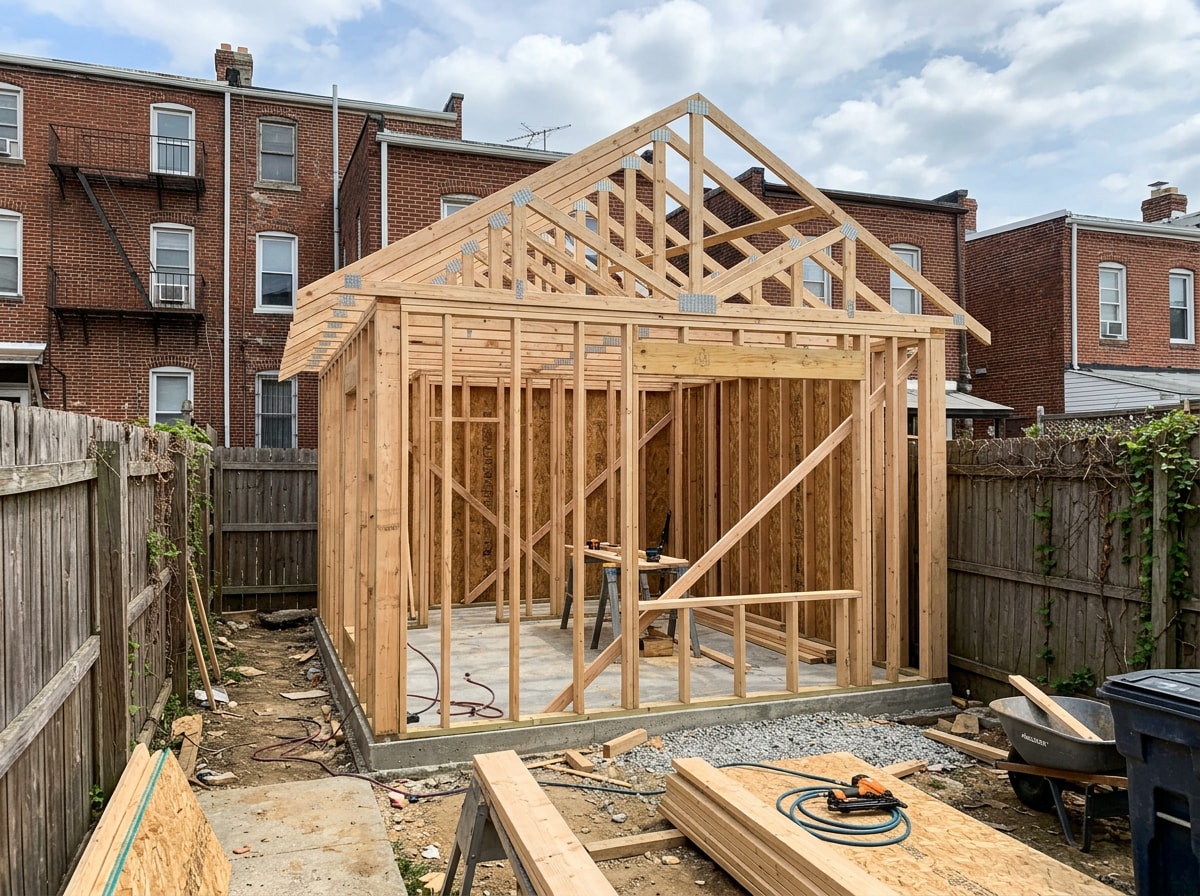
Appendix AQ (originally Appendix Q) is a set of standards written specifically for homes under 400 square feet, covering minimum ceiling heights, loft access, egress windows, and compact stair or ladder design for sleeping lofts. The International Code Council developed it because the inclusion of a new appendix in the 2018 International Residential Code addressing standards for dwellings 400 square feet or less represented an important milestone for the tiny house movement .
In practice, this appendix is what allows a loft bedroom with a 6-foot-8-inch ceiling height to pass inspection, something the standard IRC wouldn't permit outright. A plan reviewer still has final say, and lot-specific zoning rules (setbacks, parking, design compatibility) are reviewed separately from the building code itself. Don't assume code compliance alone gets you a permit; zoning sign-off is a separate hurdle.
What Does a Tiny Home Cost in Baltimore, MD?
Tiny home prices in the Baltimore area typically run from around $40,000 for a basic kit to $140,000 or more for a fully custom build. Finish level, size, and site work drive most of the variation.
| Build Path | Typical Starting Price | What's Included |
|---|---|---|
| DIY kit | $40,000–$60,000 | Shell and materials; buyer handles or hires out assembly |
| Prefab or park model | $65,000–$95,000 | Delivered mostly complete with standard finishes |
| Fully custom-built | $90,000–$140,000+ | Built to a specific floor plan, lot shape, and finish level |
Those figures cover the unit itself, not everything a Baltimore buyer pays. Lot prep, utility hookups, permit fees, and site work (especially on narrow rowhouse or alley lots) commonly add $10,000–$30,000 on top of the base price. Even at the high end, custom tiny home pricing still lands well below the cost of building a comparable detached house in the city.
When our crews at LP Homes Inc scope a backyard ADU or small detached unit in Baltimore City, the permitting and utility tie-in work usually takes longer than the actual framing and finish carpentry. That's the part most online cost calculators leave out entirely.
Ready to get real numbers for your lot? Get a Free Estimate and we'll walk through zoning feasibility before you commit to a floor plan.
Why Baltimore Homeowners Choose a Tiny Home or Backyard ADU
Most buyers working with a tiny home builder in Baltimore City fall into one of three groups.
- Short-term rental hosts near the Inner Harbor and Fells Point use a tiny home as a lower-cost alternative to a full rowhouse investment property.
- Weekend-retreat buyers want a small, low-maintenance cabin on rural or semi-rural land outside the city limits.
- Homeowners adding a backyard ADU for aging parents, adult children, or rental income on an existing lot.
Each use case comes with different zoning and permitting considerations, which is why matching the home's purpose to the right builder matters before you fall in love with a floor plan.
Tiny Home Builders & Build Options Serving Baltimore
Baltimore City itself has few builders physically headquartered within city limits. Buyers typically work with one of three types of providers:
- National or regional prefab manufacturers that ship factory-built park models into the Baltimore metro from out-of-state facilities.
- Custom tiny house shops, often based in Annapolis or Western Maryland, that build trailer-mounted homes on wheels to order.
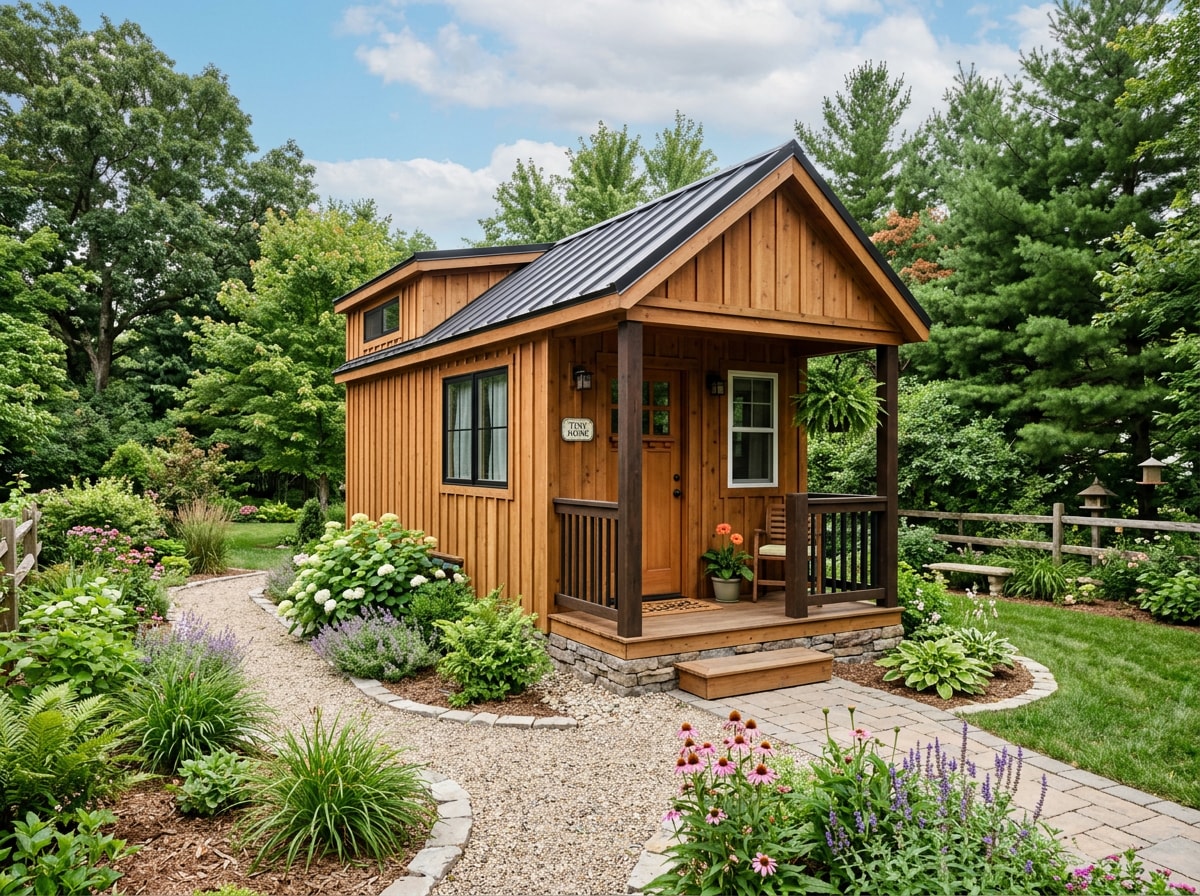
- Local general contractors who build foundation-based tiny homes and backyard ADUs as part of a broader custom construction or addition project, handling permitting, utility hookups, and inspections alongside the build itself.
For buyers whose goal is a legally permitted, code-compliant structure attached to their existing property, the third option is usually the more practical path in Baltimore City, since it keeps design, permitting, and construction under one contract. LP Homes Inc builds foundation-based tiny structures and ADUs through our Custom Home Construction and Home Additions services, and we handle basement or lower-level conversions for buyers who'd rather finish existing square footage than build new through Basement Finishing. Browse recent work on our Projects page before reaching out.
If you want a broader look at how Baltimore City's builder landscape works, our guide on residential developers in Baltimore City, MD covers how to vet a contractor's licensing and track record before signing a contract.
How the Build Process Works
The process generally breaks into three phases once you've picked a builder.
- Design and zoning check. Floor plan, square footage, and finish-level decisions happen here. In Baltimore City specifically, narrow rowhouse lots and tight alley access often drive design choices more than they would on a typical suburban lot, limiting unit width or delivery routes.
- Permitting. Your builder submits plans for zoning and building code review. This step is where Appendix AQ compliance and ADU eligibility get confirmed, and it's usually the longest part of the timeline in Baltimore City.
- Build and move-in. Construction and delivery typically take weeks for prefab and kit builds, or a few months for a fully custom foundation build. "Move-in ready" still requires a final utility hookup and inspection before occupancy.
We cover permitting and build-sequencing for small-footprint projects in more depth in our house construction company guide for Harford County, which walks through the same inspection milestones that apply to small-home builds across Maryland.
Want a feasibility check before you commit? Contact us for a free estimate, or start at our homepage to see our full range of general contracting services.
FAQ
Is a tiny home legal in Baltimore City?
Yes. Foundation-built tiny homes under 400 square feet are covered under Maryland's building code, which specifically adopts Appendix AQ for tiny houses. Tiny homes on wheels are treated as recreational vehicles, which limits long-term placement. Zoning approval is required separately from code compliance.
Can I put a tiny home in my backyard in Baltimore City?
It depends on your lot's zoning and whether the city's new ADU ordinance is in effect by the time you apply. Maryland law requires Baltimore to adopt a local ADU law by October 1, 2026. Until then, detached backyard dwellings generally need case-by-case zoning approval. Confirm your address through the city's planning department before buying a unit.
How much does a tiny home cost in Baltimore, Maryland?
Expect roughly $40,000 for a basic kit up to $140,000 or more for a fully custom build, plus $10,000–$30,000 for site work, utility hookups, and permits. Narrow rowhouse and alley lots tend to push site costs toward the higher end.
What is Appendix AQ and does it apply in Baltimore?
Appendix AQ (formerly Appendix Q) is a set of International Residential Code standards for homes 400 square feet or smaller, covering ceiling heights, loft access, and egress. Maryland's state building code regulations specifically adopt this appendix, so it applies to Baltimore City.
Can I use a tiny home as an Airbnb in Baltimore?
Short-term rental demand is strong near the Inner Harbor and other tourist areas, but the city requires zoning compliance and short-term rental registration before any structure, including a tiny home, can legally operate as an Airbnb.
How long does it take to build a tiny home in Baltimore?
Factory-built prefab units and kits can be ready in a few weeks once ordered. Fully custom, foundation-built homes commonly take two to four months, with permitting often the longest single step given Baltimore's zoning review process.