Adding a sunroom to your house in Baltimore County, MD gives you more living space and natural light without the cost of a full home addition. The catch most homeowners miss: the same enclosure that makes the room usable year-round can also push your lot coverage over a zoning limit you didn't know existed. Here's how to pick the right sunroom type, budget accurately, and clear Baltimore County's permit process on the first try.
What Is a Sunroom?
A sunroom is a permanent, insulated, glass-heavy structure attached to a home and built to extend how many months a year you can use the space.
Unlike a screened porch or open patio, it's an enclosed structure with real walls, windows, and often a conditioned roof system. That distinction matters for permitting, not just comfort.
Sunrooms come in a few different builds, and the one you choose affects comfort, cost, and how the county classifies your project. The most common split is between three-season and four-season designs, which we'll break down next.
Why Baltimore County Homeowners Are Adding Sunrooms Now
The appeal is simple: more usable square footage without the footprint and price tag of a traditional bump-out addition. A well-built sunroom becomes a reading nook, a morning coffee spot, or an entertaining space that doesn't compete with the rest of the house for furniture or foot traffic.
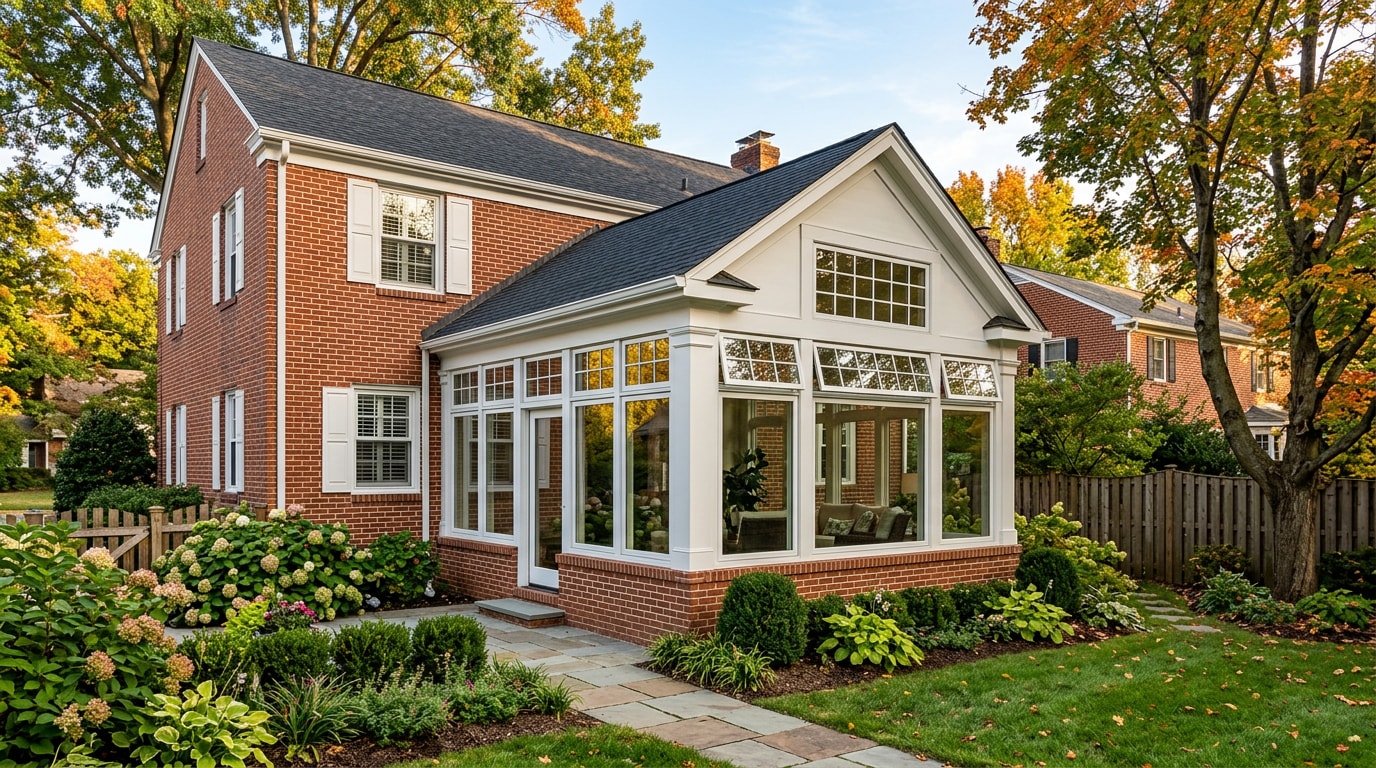
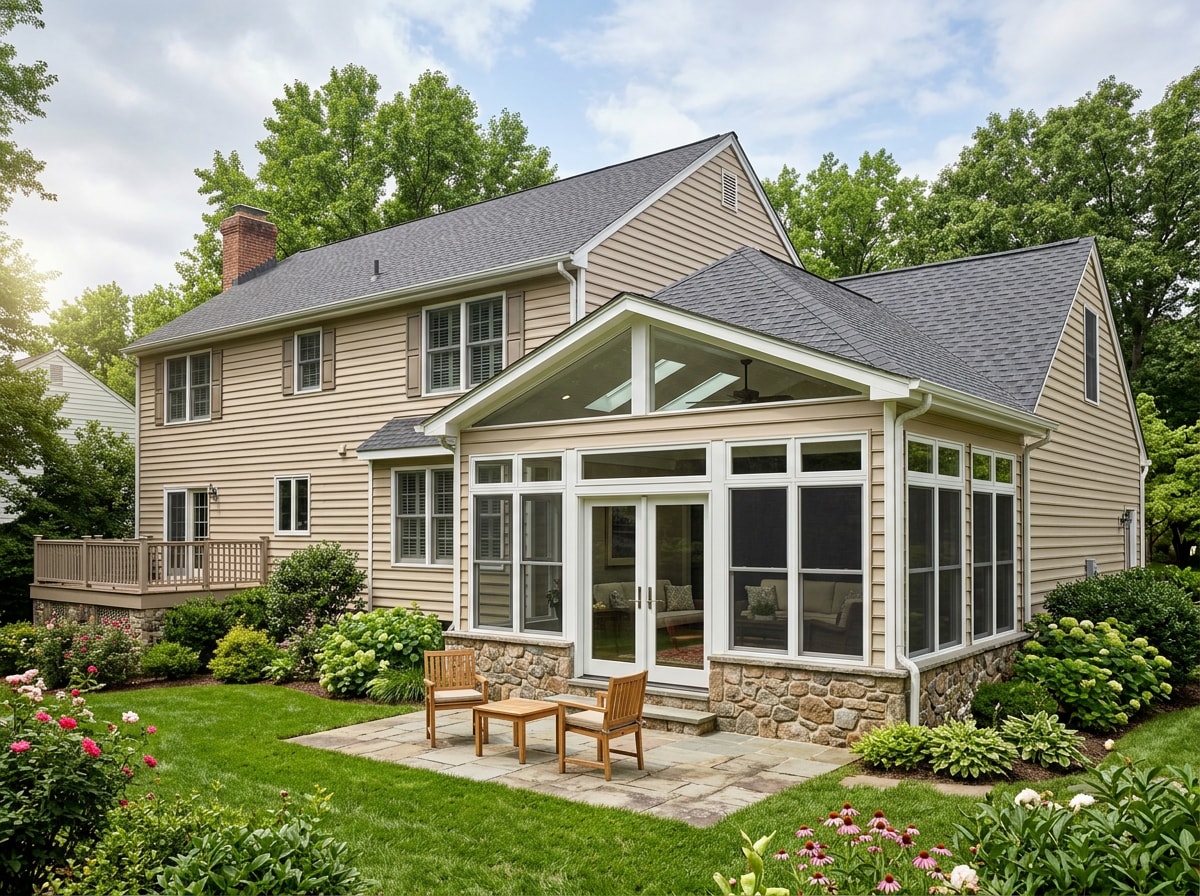
The best results look like they were always part of the home. Roofline, windows, doors, flooring, trim, and exterior materials all need to tie into your existing structure instead of reading as an afterthought bolted onto the back wall.
On the jobs we've framed across Baltimore County's older Towson and Catonsville colonials, the tie-in point between the new roof and the existing one is almost always where a rushed build shows. Get that detail right and the room reads as original to the house. Get it wrong and it's the first thing a buyer's inspector flags years later.
If you're also weighing a larger footprint, a home addition may make more sense than a sunroom for your layout. A quick consultation will tell you which direction fits your lot and budget.
Types of Sunrooms Available in Maryland
Choosing the right type comes down to budget, how you plan to use the room, and how Maryland's climate swings factor into your decision. Here are the four main options worth considering.
Three-Season Sunrooms
Three-season sunrooms use large windows and screened panels with minimal insulation, making them one of the more budget-friendly sunroom options available. They're built for spring, summer, and fall use but generally aren't suited for the cold winters common across Baltimore and Harford County.
Most three-season designs aren't tied into the home's HVAC system, which keeps upfront costs lower but limits seasonal use. If you mainly want a bright space for warmer months, this type often makes the most financial sense.
Four-Season Sunrooms
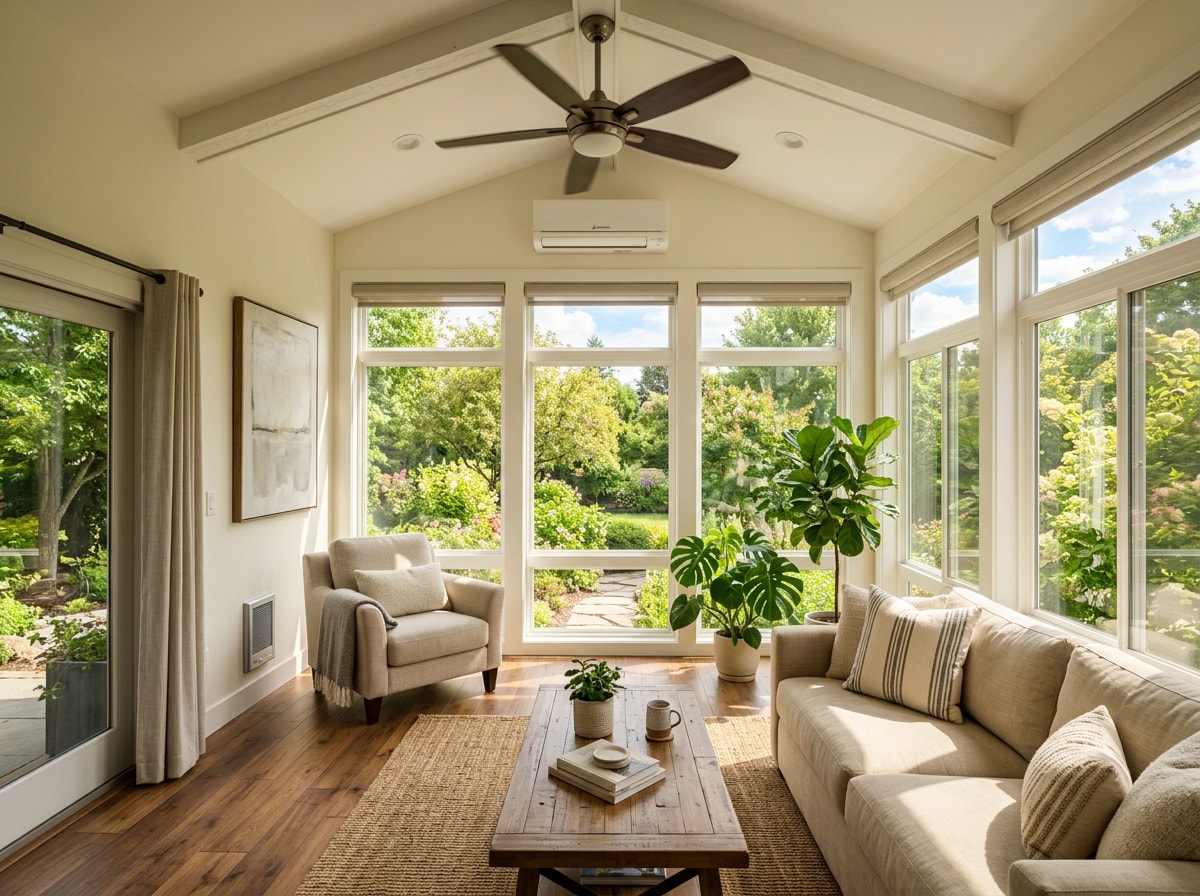
A four-season sunroom is insulated and fitted with energy-efficient windows, making it suitable for year-round use rather than just part of the year. Because it's built for comfort in every season, it's typically connected to the home's HVAC system for consistent heating and cooling.
That HVAC integration adds cost compared to a three-season build, but it also turns the room into genuine living space rather than a seasonal add-on. For homeowners who want an insulated room that functions like any other room in the house, this is usually the right call.
Conservatories or Solariums
A conservatory or solarium is a high-end sunroom built almost entirely of glass, creating a greenhouse-like room that maximizes views and light from nearly every angle. These luxury structures work well for gardening, entertaining, or an indoor-outdoor feel without stepping outside.
Because of the glass-heavy build, conservatories tend to sit at the higher end of the cost spectrum.
Screened-In Patios and Enclosed Porch Options
Not every homeowner needs a fully built sunroom. A screened-in patio or enclosed porch can make an existing outdoor space more usable while keeping the open, relaxed feel of a traditional porch, often at a fraction of the cost of a true enclosed structure.
This route works well for homeowners who want a porch enclosure without the insulation, glazing, or HVAC work a full sunroom requires. If you're starting from an existing deck or patio, a patio installation upgrade is worth pricing out alongside a full sunroom before you decide.
Which Sunroom Option Is Best for Your Home?
The right choice usually comes down to how long a season you want and how finished the room needs to feel.
- A three-season sunroom suits part-year use.
- A four-season sunroom works as a fully finished room.
- A screened patio upgrades existing outdoor space.
- A solarium prioritizes light and views above all else.
| Sunroom Type | Approx. 2026 Cost Range* | HVAC Needs | Best For |
|---|---|---|---|
| Three-Season | $20,000–$40,000 | Rarely integrated | Spring through fall lounging |
| Four-Season | $40,000–$80,000+ | Fully integrated | Year-round living space |
| Conservatory/Solarium | $50,000–$100,000+ | Optional, minimal | Gardening, entertaining, luxury use |
| Screened Patio/Enclosed Porch | $10,000–$25,000 | None | Budget-friendly outdoor upgrade |
*Figures are general 2026 estimates for the Maryland market and will vary based on size, materials, site conditions, and the contractor you hire.
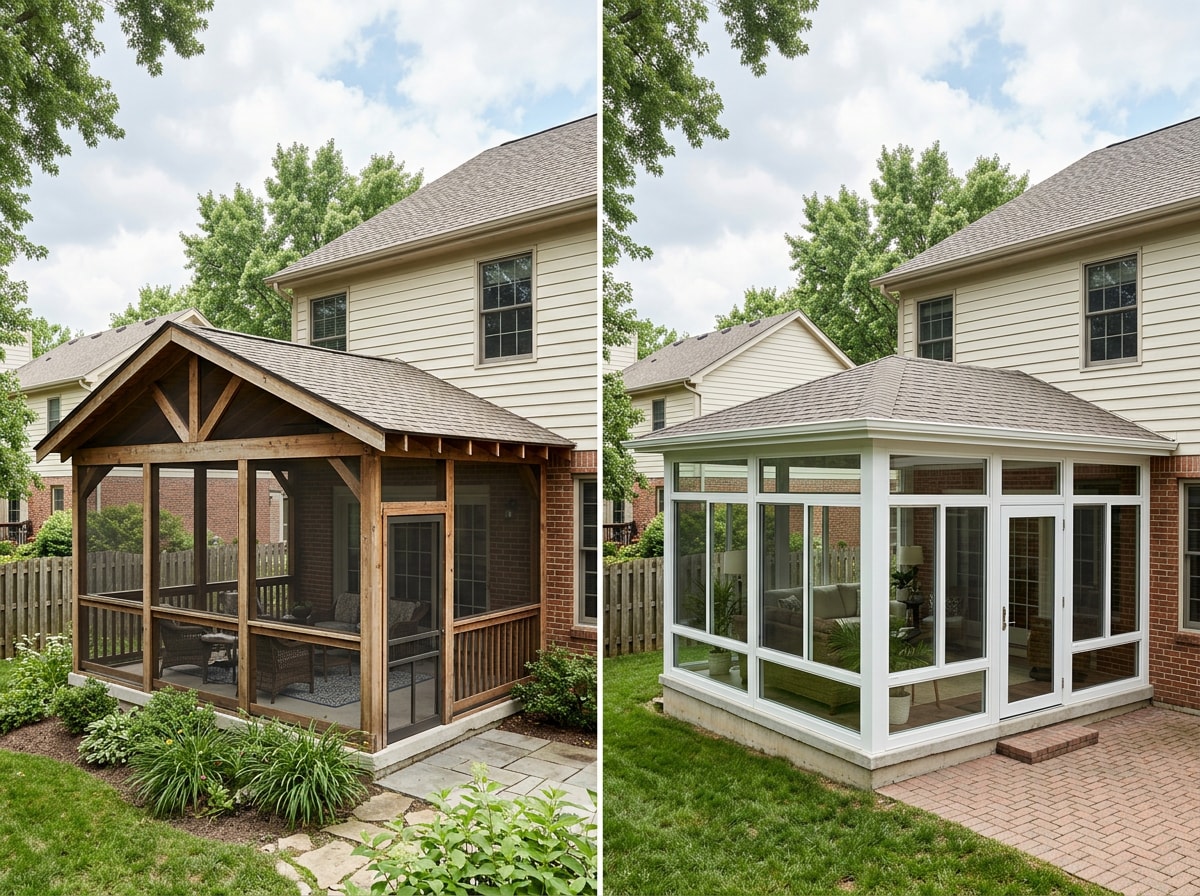
Still unsure which fits your home? A sunroom construction specialist can walk the site and recommend the right type for your layout and budget.
Materials and Energy Efficiency
Materials drive both comfort and long-term maintenance. Window glazing, roof type, and frame material each carry tradeoffs worth understanding before you sign a contract.
Energy-efficient double- or triple-pane glass limits heat loss in winter and solar gain in summer. Insulated roof panels offer more consistent thermal control than an all-glass roof. Frame choice matters too: aluminum resists weathering and humidity well, vinyl offers strong insulation with low upkeep, and wood gives a classic look but needs more maintenance in Maryland's humid summers.
When comparing contractor quotes, ask for the specific U-factor and solar heat gain coefficient of the glazing being proposed. Replacing old windows with ENERGY STAR certified windows lowers household energy bills by an average of up to 13 percent nationwide when replacing single-pane windows. That's a useful benchmark for judging whether a quote is actually offering efficient materials or just using the term loosely. You can check current performance standards directly on the ENERGY STAR windows, doors, and skylights program page.
Planning and Permits for Maryland Sunroom Projects
Permitting is not optional for a true sunroom addition in Maryland, and requirements vary by jurisdiction. Here's what applies specifically in Baltimore County.
Local Permit Requirements
A permit is required if you are making a weatherproof enclosure of an existing porch or deck, including in historical areas, because enclosing a porch or deck is considered an addition that extends the "indoor" area of the house and is subject to the same setback limitations as the house itself. That filing is handled through Baltimore County's Enclosure Alteration Permit, and Baltimore County only accepts Mastercard, Visa and PayPal electronic payments for permit fees.
Building a sunroom as new construction rather than converting an existing deck falls under a separate track. Permits are required for any additions, alterations or structural modifications to existing dwellings, including those located in historic districts. Either way, the review tends to mirror other home addition permits rather than a quick sign-off.
Here's a detail most sunroom guides skip entirely: lot coverage. If your property sits in a Chesapeake Bay Critical Area overlay, which covers a meaningful stretch of waterfront and near-waterfront Baltimore County, enclosing a deck can push your total lot coverage past the zoning cap even when the footprint itself doesn't change. In one real Baltimore County case, petitioners requested variance relief from the Baltimore County Zoning Regulations to allow a proposed lot coverage of approximately 18% to enclose a deck and create a sunroom, in lieu of the maximum lot coverage of 15% . That variance was granted, but it still required a formal hearing and added months to the timeline. Setback issues show up too: in a separate case, petitioners requested variance relief to permit a proposed sunroom addition on the side of the existing dwelling with a side yard setback of 8 feet in lieu of the required 10 feet .
The lesson: before you finalize a design, have your contractor or a zoning reviewer check your lot coverage percentage and setbacks against current BCZR limits, not just the building code. Working with a contractor who holds an active MHIC license also helps keep the permit process on track. Our Baltimore County service area page covers what to expect locally, and our construction and zoning guide for Baltimore County goes deeper into permit timelines across project types.
Foundation and Roofline Requirements
Two details catch homeowners off guard most often: foundation depth and roofline integration.
Under the residential building code, all exterior footings must be placed at least 12 inches below the undisturbed ground surface and below the frost depth established by the local jurisdiction. That can add cost that's easy to underestimate during early budgeting, especially on a room with a slab or pier foundation. There is a code-approved alternative worth asking your contractor about: a frost-protected shallow foundation, which uses rigid insulation to keep footings shallower than standard frost depth in a heated structure. You can review the governing requirements in the ICC's residential foundations chapter.
The sunroom also needs to tie into the home's existing roofline and structure properly, not simply attach to an exterior wall. Skipping this step is the single most common cause of leaks and structural callbacks down the road.
Planning Your Timeline
Expect a real planning window before construction starts. Design and permitting typically take several weeks on their own, before construction even begins. Actual build time then depends on the size and complexity of the sunroom itself.
Starting the permitting process early, especially before peak contractor season in spring, gives you more flexibility on your construction timeline. If your lot sits in a Critical Area overlay or needs a setback variance, build in extra weeks for the hearing process described above.
Is a Sunroom Addition Worth It in Maryland?
Whether a sunroom is worth it depends more on how you'll use the space than on resale numbers alone. On a national level, sunroom additions typically recoup approximately 49 to 55 percent of their project cost at resale. Four-season sunrooms with HVAC integration tend to hold value better than three-season builds, since appraisers and buyers generally count insulated, conditioned square footage differently than seasonal space.
For a broader look at how remodeling projects compare on return and homeowner satisfaction, the National Association of REALTORS' Remodeling Impact Report reveals which projects deliver the highest returns, greatest homeowner satisfaction, and strongest buyer appeal .
If daily use matters more to you than resale math, a well-built sunroom can be worth it regardless of the ROI percentage. Browse our completed project gallery for examples of finished sunroom work in the area, or get a free estimate to see what a custom design would cost for your specific home.
A sunroom built by a team that treats the roofline, foundation, and permit paperwork as one connected job, rather than three separate problems, tends to go smoother from design to final inspection. That's the approach we take on every LP Homes Inc sunroom project in Baltimore County.
FAQ
How much does a custom sunroom cost in Baltimore County, MD?
Costs generally range from about $10,000 for a screened patio conversion to $100,000 or more for a high-end conservatory. Three-season rooms typically fall between $20,000 and $40,000, while four-season sunrooms with HVAC integration run $40,000 to $80,000 or higher depending on size and finishes.
Do you need a permit to build a sunroom in Maryland?
Yes. Almost all true sunroom additions require a building or enclosure alteration permit in Maryland, including in Baltimore County. Requirements vary by jurisdiction, so check with your local permitting office or request a free estimate from a contractor familiar with local code.
Does adding a sunroom increase home value or property taxes?
A sunroom can increase resale value, particularly a four-season design that adds conditioned square footage. It may also trigger a property tax reassessment once the county records the permanent addition, so budget for a possible increase.
Is a screened porch the same as a sunroom for permit purposes?
No. A screened porch is typically an unconditioned, open-air structure, while a sunroom is glazed, insulated, and often climate-controlled. Permit classification differs between the two, which is why Baltimore County treats enclosure conversions as their own permit category.
Can I convert my existing deck or porch into a sunroom?
Usually, yes, and it's often cheaper than building a sunroom from scratch since the deck structure can sometimes serve as the base. Check your lot coverage first. Enclosing a deck adds to your total lot coverage percentage, and if your property is in a Critical Area overlay or already near the zoning cap, you may need a variance before the county approves the conversion.
How long does it take to build a sunroom in Baltimore County?
Plan on several weeks for design and permitting before construction starts, longer if a zoning variance is needed. Construction itself typically runs a few weeks for a simple screened patio up to a few months for a custom four-season room with full HVAC integration.