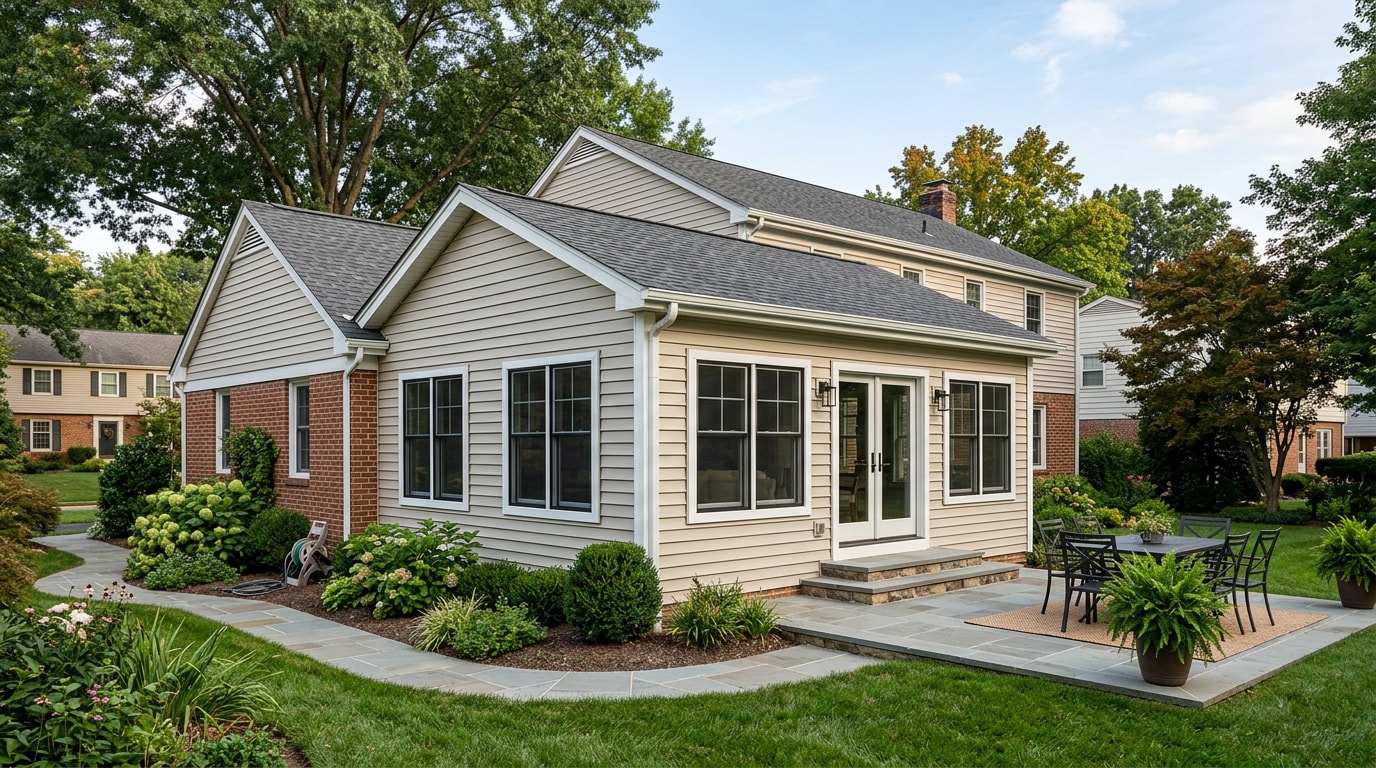
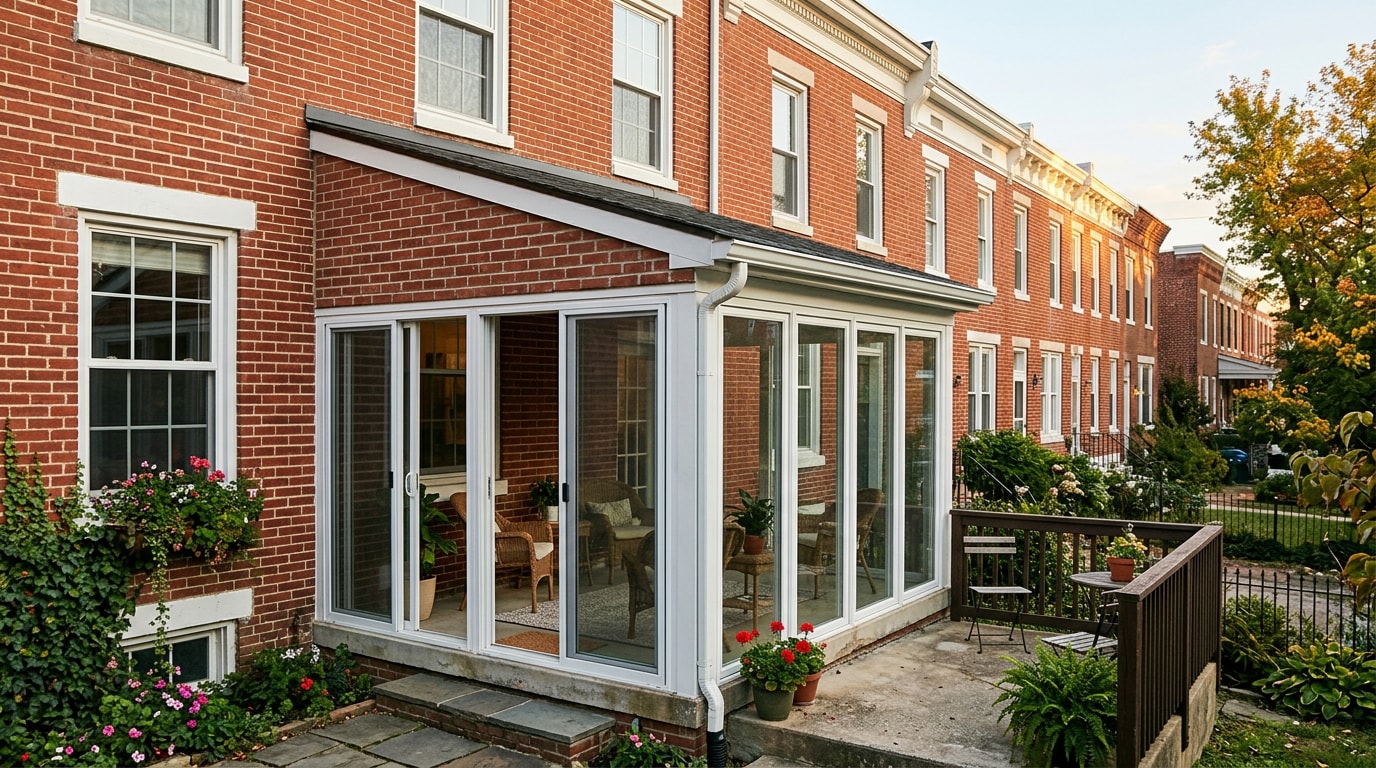
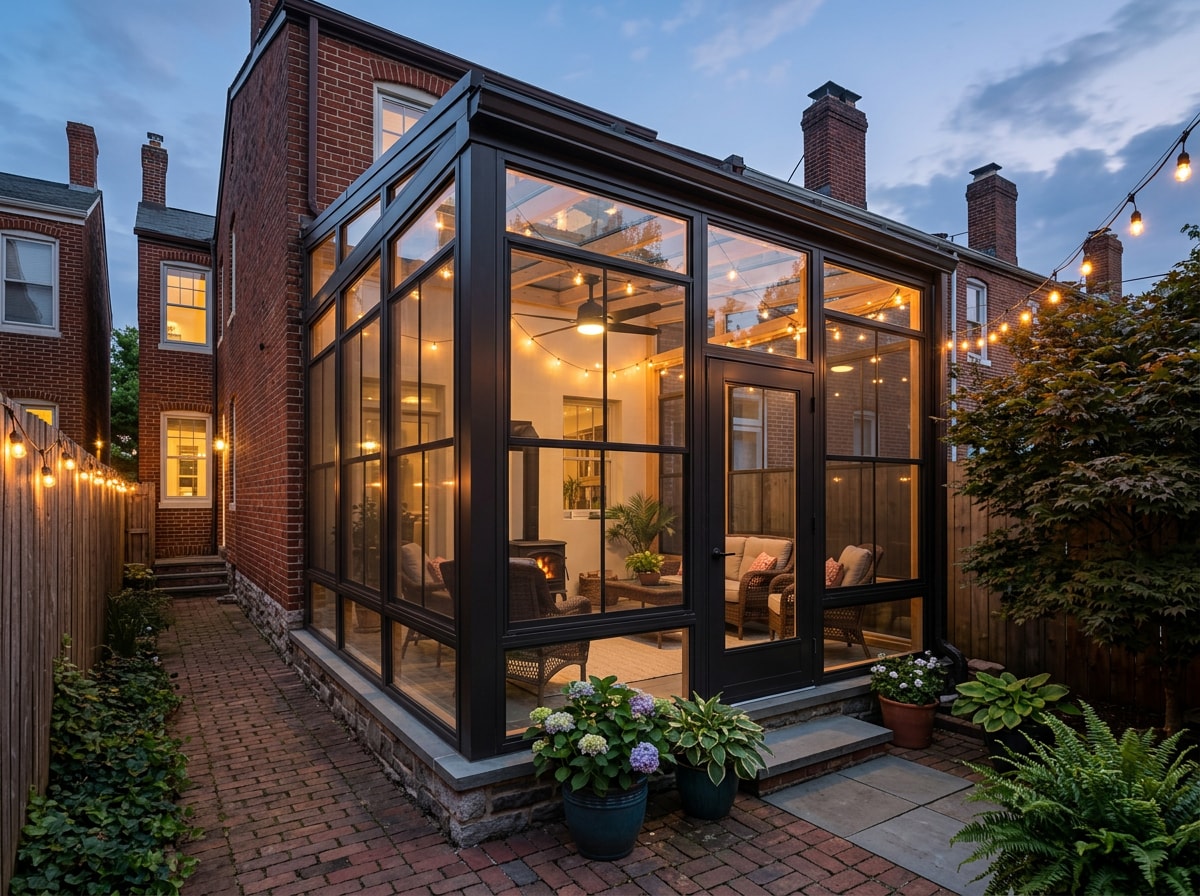
Three season sunrooms in Baltimore City, MD give rowhome and detached-home owners extra living space without the cost or complexity of a full four-season addition. These glass or vinyl-enclosed rooms work with Baltimore's mild spring, summer, and fall weather, then close up for storage once winter sets in. Here's what the models actually cost, which permits apply inside city limits, and how to pick the right build for a tight urban lot.
Visit LP Homes Inc to see our services and request a free estimate.
What Is a Three-Season Sunroom?
A three-season sunroom is a glass- or vinyl-enclosed room attached to your home. It floods the space with natural light while skipping most of the insulation and HVAC work found in four-season additions.
Baltimore's weather pattern makes this a practical fit. Average highs run in the 60s and 70s from April through October in the region, based on National Weather Service climate normals for the area, which lines up closely with when an unheated three-season room feels comfortable to use.
For Baltimore City homes with narrow rowhouse backyards, a three-season room adds real square footage without the footprint or budget of a full renovation. You can see how the same concept plays out just north of the city in our guide to adding a sunroom in Baltimore County, where lot sizes and permit paths differ slightly from city rules.
Three-Season Sunroom Cost in Baltimore City, MD
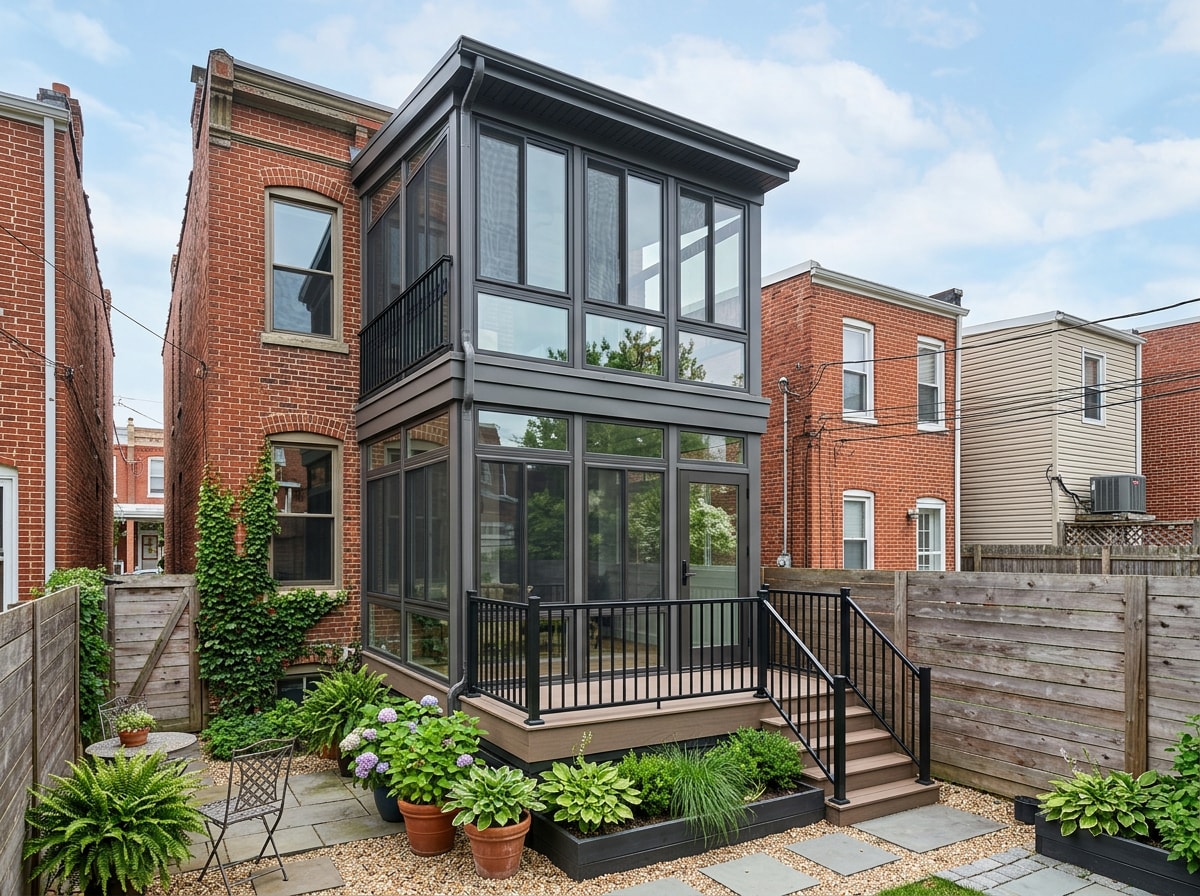
Cost depends on size, glazing type, flooring, roof style, and whether electrical work is included. Local cost-estimating data for the Baltimore area generally places three-season construction in the $100 to $160 per square foot range, with full projects landing anywhere from roughly $15,000 to $40,000 depending on scope.
Several factors push that number up or down:
- Glazing type. Vinyl panel systems cost less than full glass walls.
- Foundation condition. Building on an existing patio slab is cheaper than pouring new footings.
- Electrical work. Basic outlets and lighting add less than ceiling fans, sound wiring, or a mini-split later.
- Roof style. A shed roof tied into the existing structure is typically more affordable than a cathedral or hip roof.
On rowhome projects specifically, we've found the biggest cost swing isn't the room itself, it's site access. A block with no alley means material and dumpster logistics have to be planned around street permits, which can add labor hours that a suburban lot never deals with.
Get an exact price by requesting a free estimate based on your lot and goals rather than relying on a national average.
Permits and Historic District Rules for Baltimore City Rowhomes
Most sunroom additions need a Baltimore City building permit through the Department of Housing and Community Development (DHCD), plus inspections at various construction stages.
Where Baltimore City differs from the surrounding counties is historic district review. If your rowhome sits in a Commission for Historical and Architectural Preservation (CHAP) district, exterior changes including additions need CHAP's approval before DHCD can issue the building permit at all. According to the city's own guidance, properties in these districts are referred to CHAP and the applicant must obtain a Notice-to-Proceed before the permit is issued. You can confirm whether your block falls inside a CHAP district directly through Baltimore City's permit referral guidance.
A contractor familiar with city permitting should handle this for you, including:
- Confirming whether your address sits in a CHAP district before design work starts
- Preparing structural and electrical permit paperwork
- Scheduling CHAP review alongside the standard DHCD permit, not after it
- Meeting city inspectors at each required stage
Skipping this step is one of the most common reasons sunroom projects stall in Baltimore City specifically, since a permit filed before CHAP sign-off simply sits on hold.

Three-Season Sunroom Models and Features
Baltimore-area builders typically install a handful of standard glazing systems. Knowing the differences helps you understand exactly what's in a quote.
Vinyl panel systems open up to around 75 percent for strong cross-ventilation on warm days, then close for cooler evenings. They're a solid all-around choice for homeowners who want maximum airflow without paying glass-wall prices.
Full glass sunrooms swap vinyl for glass panels on an aluminum frame, giving brighter sightlines and a more open feel. Glass also tends to hold up better against UV fading over time, though it generally costs more per window than vinyl.
Three-season patio rooms are built with either insulated tempered glass or more affordable single-pane windows. Many builds add ceiling fan wiring, lighting, or sound wiring so the room functions as a true seasonal hangout rather than just an enclosed porch.
| Feature | Single-Pane | Tempered Glass | Vinyl Panel | Full Glass |
|---|---|---|---|---|
| Typical cost tier | Lowest | Mid-high | Low-mid | Mid-high |
| Ventilation | Limited | Limited | Up to 75% open | Fixed or limited |
| UV/impact durability | Lower | Higher | Moderate | Higher |
| Best for | Tight budgets | Safety-conscious buyers | Max airflow | Bright, glass look |
See examples of completed builds on our projects page, or browse our sunroom construction services for the full lineup.
Three-Season vs. Four-Season Sunrooms
A four-season sunroom uses stronger insulation, energy-efficient glass, and often HVAC tie-ins, so it functions as a true year-round extension of the home. A three-season room skips most of that, which keeps the price lower but limits comfortable use to spring through fall once Baltimore winters set in.
| Factor | Three-Season | Four-Season |
|---|---|---|
| Insulation | Minimal or none | Insulated walls and roof |
| Glazing | Single-pane or basic tempered | Insulated, energy-efficient glass |
| HVAC | Not typically included | Often ducted or mini-split |
| Typical cost | Lower | Higher |
| Permit complexity | Moderate | Higher (structural, electrical, HVAC) |
Window performance claims on four-season upgrades should follow published U-factor and Solar Heat Gain Coefficient criteria from ENERGY STAR's residential window program, since actual performance still varies by installer and materials used. If year-round use matters more than upfront cost, it's worth pricing both options before committing. A full home addition that includes a four-season room is also worth comparing against a standalone sunroom build.
Choosing a Sunroom Builder in Baltimore City
Look for a contractor who is licensed to work in Maryland, carries active insurance, and has handled CHAP review on past Baltimore City projects, not just suburban builds. Ask to see photos of rowhome-specific work, since tight lot access and alley logistics change how a project gets staged.
Our team at LP Homes Inc. builds sunrooms, patio installations, and full additions across Baltimore City and the surrounding counties, and we handle the CHAP and DHCD paperwork directly so homeowners aren't stuck navigating two agencies on their own. Start with a free estimate to get a price based on your specific rowhome or lot, not a national average.
FAQ
How much does a three-season sunroom cost in Baltimore City, MD?
Cost depends on size, materials, window style, flooring, and roof design. Local estimates generally put three-season construction around $100 to $160 per square foot, with full projects typically running $15,000 to $40,000. Get an exact number by requesting a site-specific quote.
Do I need a permit for a sunroom in Baltimore City?
Yes. Most sunroom additions require a Baltimore City building permit through DHCD along with inspections at various stages. If your property sits in a CHAP historic district, you'll also need CHAP's Notice-to-Proceed before the building permit can be issued.
Can I add a three-season sunroom to a Baltimore City rowhome?
In most cases, yes, though tight lot lines, shared walls, and alley access affect design and staging. If the rowhome is in a CHAP historic district, exterior changes need CHAP approval first, which can add several weeks to the timeline.
What is the difference between a three-season and four-season sunroom?
A three-season sunroom is designed for comfortable use during spring, summer, and fall and typically skips heavy insulation and HVAC. A four-season sunroom adds insulated walls, energy-efficient glass, and climate control so it works year-round, including cold winter months.
What is the difference between a screened porch and a three-season room?
A screened porch uses mesh screening for airflow and bug protection. A three-season room uses operable glazed or vinyl panels that close completely, giving it a longer usable season and better protection from wind, rain, and cooler evenings.
Does adding a sunroom increase home value in Baltimore City?
Sunrooms generally add usable square footage and curb appeal, which can support resale value, though the return varies by neighborhood and how the room is finished. A licensed contractor can help size the project to match what similar homes nearby are selling for.